Coffee grounds aren’t just for perking you up in the morning, they can do the same for your houseplants. Before you dump yesterday’s brew into the trash, consider that those grounds contain nitrogen, potassium, and other nutrients plants actually crave. But not all houseplants benefit equally from coffee ground amendments, and dumping wet grounds directly onto soil can backfire. This guide breaks down which indoor plants genuinely thrive when you add coffee grounds, how to apply them correctly, and the mistakes that can turn a free fertilizer into a moldy mess.
Table of Contents
ToggleKey Takeaways
- Indoor plants that like coffee grounds include acid-loving species like African violets and azaleas, as well as tropical plants such as philodendrons, pothos, and peace lilies that thrive in nitrogen-rich, organic soils.
- Always dry used coffee grounds for 24–48 hours before applying to prevent mold growth, fungus gnats, and soil compaction; wet grounds create water-repellent barriers and anaerobic pockets that harm plant health.
- Mix 1–2 tablespoons of dried grounds into the top 1–2 inches of soil or use a safe ratio of 10–20% grounds by volume in potting mix to avoid nitrogen burn and root damage.
- Coffee grounds are a supplemental soil amendment containing about 2% nitrogen but are not a replacement for balanced fertilizers; use them alongside other organic amendments and feed plants with complete fertilizer every 4–6 weeks during growing season.
- Monitor soil pH every 3–6 months with a test kit, as coffee grounds are nearly neutral (pH 6.5–6.8) and won’t significantly acidify soil for acid-loving plants without strategic, consistent application.
- Avoid common mistakes like using flavored coffee grounds, applying grounds to alkaline-soil plants, overloading soil, or ignoring fungus gnat infestations to ensure coffee grounds benefit your houseplants.
Why Coffee Grounds Work as Plant Fertilizer
Used coffee grounds contain roughly 2% nitrogen by volume, plus trace amounts of phosphorus and potassium, the NPK trio every fertilizer label lists. Nitrogen drives leafy growth, making it especially valuable for foliage-heavy houseplants. The grounds also add organic matter to potting mix, improving soil structure and water retention over time.
Here’s the key detail most people miss: used coffee grounds are nearly neutral in pH (around 6.5 to 6.8), not acidic. The brewing process extracts most of the acidic compounds into your cup. Fresh, unbrewed grounds are acidic (around 5.0 pH), but most DIYers work with used grounds. If you’re aiming to lower soil pH for acid-loving plants, you’ll need to use grounds strategically and monitor soil acidity with a simple pH test kit.
Coffee grounds also contain small amounts of magnesium, calcium, and copper. These micronutrients support enzyme function and chlorophyll production, though they’re not present in high enough concentrations to replace a complete fertilizer. Think of coffee grounds as a supplemental soil amendment, not a standalone feeding program.
One biological bonus: grounds attract earthworms when used outdoors, but indoors they encourage beneficial microbes that break down organic matter. This microbial activity can improve nutrient availability in potting soil, especially in mixes that rely heavily on peat or coir.
Best Indoor Plants That Thrive with Coffee Grounds
Not every houseplant tolerates coffee grounds equally. Success depends on the plant’s native habitat, preferred pH range, and nutrient needs. Here’s a breakdown by category.
Acid-Loving Houseplants
These species evolved in environments with acidic soil, think forest floors rich in decomposing pine needles. They tolerate or prefer a pH below 6.5, making them ideal candidates for coffee ground amendments.
- African violets (Saintpaulia ionantha): Prefer pH 5.8–6.2. Mix a tablespoon of dried, used grounds into the potting mix every two months to maintain slight acidity.
- Jade plants (Crassula ovata): Tolerate a wide pH range but appreciate the micronutrients in coffee grounds. Use sparingly, succulents are sensitive to excess nitrogen.
- Azaleas (Rhododendron spp.): Indoor varieties thrive in acidic conditions (pH 4.5–6.0). Coffee grounds help maintain that range, but combine them with peat-based potting mix for best results.
- Cyclamen (Cyclamen persicum): These tuberous perennials prefer acidic to neutral soil. A light top-dressing of grounds every six weeks supports flowering and foliage.
Many acid-loving houseplants also benefit from the slow-release nitrogen coffee provides, which prevents the rapid growth spurts that weaken stems.
Tropical Plants That Benefit from Coffee Grounds
Tropical species often grow in rich, organic soils in their native habitats. They respond well to the organic matter and moderate nutrient boost coffee grounds provide.
- Philodendrons (all varieties): These jungle natives handle pH 5.5–6.5 easily. Work a thin layer of dried grounds into the top inch of soil or mix them into fresh potting medium during repotting.
- Pothos (Epipremnum aureum): Adaptable and forgiving, pothos plants use the extra nitrogen to fuel their vigorous vine growth. Avoid overdoing it, too much nitrogen reduces variegation in colorful cultivars.
- Snake plants (Sansevieria trifasciata): Surprisingly tolerant of coffee grounds even though being drought-adapted. Use grounds sparingly (once every three months) to avoid moisture retention issues.
- Christmas cactus (Schlumbergera bridgesii): Prefers slightly acidic conditions and benefits from the organic matter. Apply grounds lightly after the blooming period ends.
- Peace lilies (Spathiphyllum spp.): These shade-tolerant plants appreciate the nitrogen boost, especially during active growth in spring and summer.
Tropical plants growing in standard potting mixes sometimes develop nutrient deficiencies because peat and coir don’t hold minerals well. Coffee grounds address that gap without requiring synthetic fertilizers.
How to Use Coffee Grounds on Indoor Plants Safely
Application method matters as much as plant selection. Wet grounds clump, mold, and can create anaerobic pockets in potting soil, none of which your plants want.
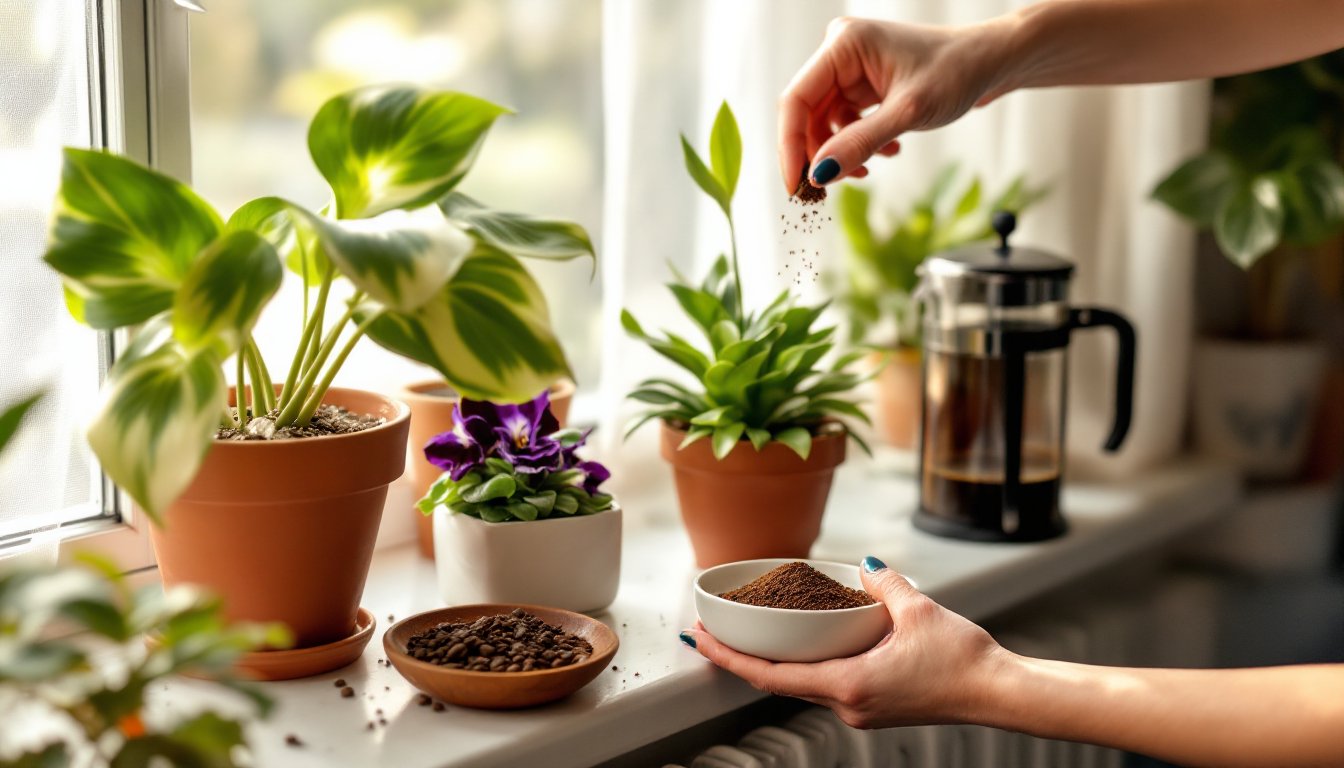
Dry the grounds first. Spread used coffee grounds on a baking sheet or newspaper and let them air-dry for 24–48 hours until they’re crumbly. This prevents mold growth and makes them easier to incorporate into soil. Damp grounds attract fungus gnats and can form a hydrophobic crust on the soil surface.
Mix, don’t pile. Work 1–2 tablespoons of dried grounds into the top 1–2 inches of potting soil, or blend them into fresh mix during repotting. A ratio of 10–20% grounds to potting mix by volume is safe for most houseplants. Never create a thick layer on the surface, it forms a water-repellent barrier.
Composting is even better. If you maintain a small indoor compost bin or vermicompost system, add coffee grounds there first. Composted grounds deliver nutrients more evenly and eliminate any risk of nitrogen tie-up (the temporary nutrient lock that occurs when soil microbes consume fresh organic matter).
Liquid feed alternative. Steep 1 cup of used grounds in 1 gallon of water for 24 hours, then strain. Use this weak “coffee tea” to water plants once a month. It’s gentler than solid grounds and distributes nutrients more uniformly. This method works especially well for flowering indoor plants that need consistent, mild feeding.
Monitor soil pH. Every three to six months, test soil pH with an inexpensive probe or test kit (available at any garden center for under $15). If pH drops below your plant’s preferred range, flush the pot with plain water or adjust with a bit of lime.
Safety note: Always wear gloves when handling potting soil and amendments. Some soil mixes contain perlite dust or fungal spores that can irritate skin and lungs. Work in a ventilated area.
Common Mistakes to Avoid When Using Coffee Grounds
Even experienced plant parents mess this up. Here’s what goes wrong, and how to dodge those problems.
Using wet grounds. Fresh, wet coffee grounds compact soil, reduce aeration, and invite mold. They also smell sour as they decompose anaerobically. Always dry them first.
Overloading the soil. More isn’t better. Excessive coffee grounds raise nitrogen levels too high, which burns roots and causes leaf tip browning. Stick to the 10–20% ratio mentioned earlier. For small pots (6 inches or less), one tablespoon per month is plenty.
Applying to plants that prefer alkaline soil. Species like lavender, rosemary, and some cacti evolved in limestone or alkaline soils. Coffee grounds push pH in the wrong direction for them. Know your plant’s native habitat before amending.
Ignoring fungus gnats. Moist organic matter attracts these tiny flying pests. If you see gnats after adding coffee grounds, you’ve either used wet grounds or overwatered. Let soil dry out between waterings and consider mixing grounds deeper into the soil rather than top-dressing.
Assuming coffee grounds replace fertilizer. They don’t. Coffee grounds are low in phosphorus and potassium, the “P” and “K” in NPK. Plants in active growth still need a balanced fertilizer every 4–6 weeks during growing season. Grounds supplement, not substitute.
Forgetting to rotate amendments. Using only coffee grounds year-round creates a one-dimensional nutrient profile. Alternate with compost, worm castings, or slow-release granular fertilizers to provide a broader range of nutrients. Many common house plants benefit from varied feeding sources.
Not accounting for pot size. A large indoor plant in a 14-inch pot can handle more grounds than a 4-inch succulent. Scale your application to soil volume, roughly 1 tablespoon per 2 quarts of potting mix is a safe baseline.
Using flavored coffee grounds. Hazelnut, vanilla, and other flavored coffees often contain oils and additives that can harm plants or attract pests. Stick to plain coffee grounds, no espresso pods with plastic residue, either.
Conclusion
Coffee grounds offer a sustainable, no-cost way to improve potting soil and feed houseplants, if you use them correctly. Focus on acid-loving and tropical species, dry the grounds thoroughly, and keep application rates modest. Avoid the temptation to dump yesterday’s French press directly onto your pothos: a little prep work prevents mold, pests, and nutrient imbalances. For best results, blend coffee grounds with a rotation of other organic amendments and monitor soil pH over time. Your plants will reward careful feeding with stronger growth and healthier foliage.