Building a modern tiny house with a loft isn’t just about cramming a bedroom into 400 square feet, it’s about smart vertical design that feels intentional, not claustrophobic. Lofts turn dead ceiling space into usable square footage, but only if they’re planned right from the start. The difference between a cozy sleeping nook and a cramped attic comes down to headroom, access, ventilation, and honest material choices. Whether someone’s planning a full DIY build or hiring out the structural work, understanding how modern tiny houses handle loft design prevents expensive redesigns mid-project. This guide covers the design, materials, layout, codes, and build decisions that make a tiny house with a loft actually livable.
Table of Contents
ToggleKey Takeaways
- A modern tiny house with loft maximizes usable space through smart vertical design, requiring at least 13–14 feet of total height to provide comfortable headroom and prevent the loft from feeling cramped.
- Loft access, ventilation, and emergency egress windows are non-negotiable safety and code requirements; fixed stairs or ship’s stairs are superior to ladders for daily livability and regulatory compliance.
- Material selection directly impacts weight, durability, and cost—use 3/4″ tongue-and-groove subfloring, closed-cell spray foam insulation, and lightweight interior finishes like shiplap instead of drywall to keep trailer-based builds under 10,000 pounds.
- Open shelving, built-in storage under stairs, and platform beds with hydraulic lift kits maximize every inch of the loft without sacrificing functionality or adding visual clutter.
- DIY builders with solid framing and carpentry skills can realistically complete a modern tiny house with loft in 800–1,200 hours, but hiring professionals for structural engineering, plumbing, and electrical connections prevents costly mistakes and code violations.
- Downstairs layouts must efficiently combine cooking, eating, working, and storage in 150–200 square feet; galley kitchens, fold-down tables, and wet baths keep the open floor plan functional and navigable.
What Makes a Modern Tiny House with Loft Stand Out?
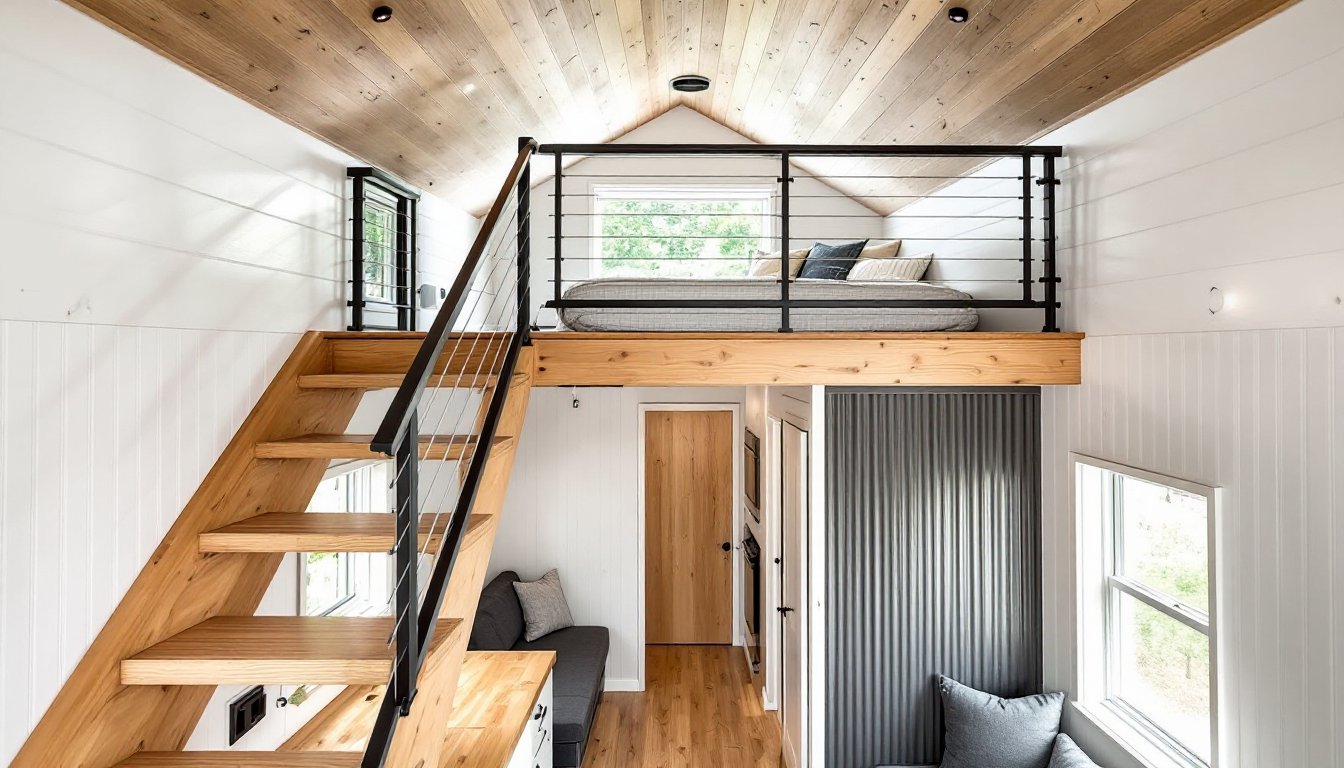
Modern tiny houses lean heavily on clean lines, multi-functional spaces, and exposed structural elements that traditional homes hide behind drywall. The loft itself becomes a focal point rather than an afterthought, open railings made from steel cable or black iron pipe replace solid walls, and the space below stays light-filled.
Unlike older tiny house designs that felt like RVs with wood siding, modern builds use materials like corrugated metal panels, fiber cement siding, and large-format windows (often 36″×48″ or bigger) to bring in natural light. The loft typically sits at one end, accessed by a ladder, alternating-tread stairs, or a compact switchback staircase.
Key distinctions:
- Ceiling height matters: Modern designs push for 13–14 feet total height to give the loft enough headroom (minimum 36″ of clearance under the ridgeline, but 42–48″ is more comfortable).
- Open shelving and floating elements: Built-ins replace freestanding furniture to maximize floor space.
- Minimalist color palettes: White, gray, natural wood tones, and matte black accents dominate.
The loft doesn’t just add sleeping space, it defines the entire interior aesthetic. When designed well, it feels like an intentional mezzanine, not a cramped crawlspace.
Essential Design Elements for Your Loft Space
Loft design starts with access and safety, not decor. A ladder saves floor space but becomes a nuisance for anyone over 40 or moving around at night. Alternating-tread stairs (also called ship stairs) are a middle ground, they take up about 3 feet of linear space and provide a handrail. Full staircases with storage underneath eat 8–10 square feet but make the loft genuinely usable.
Railings must meet code: 36 inches minimum height with balusters spaced no more than 4 inches apart (to prevent a child’s head from passing through). Cable railing kits work well in modern builds, use 1/8″ stainless steel cable tensioned to 300+ pounds, spaced 3 inches apart vertically.
Lighting in a loft can’t rely on a single overhead fixture. Recessed LED puck lights (3000K for warm white) work well in the ceiling rafters, and clip-on or wall-mounted reading lights keep the space functional without eating into already-tight square footage.
Ventilation is non-negotiable. Lofts trap heat, sometimes 15–20°F warmer than the main floor in summer. Install a roof-mounted vent fan (like a MaxxAir or Fantastic Fan, rated for 900+ CFM) and a small operable window on each gable end for cross-ventilation.
Maximizing Vertical Space and Storage Solutions
Every inch in tiny house bedrooms counts. Build storage into the loft structure itself: knee walls (the short walls where the roof slopes down) are perfect for recessed cubbies or slide-out drawers.
Use the space under the stairs for pull-out pantry shelves or a compact closet. Floating shelves mounted to studs with heavy-duty brackets (rated for 50+ pounds) keep books and essentials off the floor. Avoid freestanding furniture, it shifts during towing if the house is on a trailer.
Custom-built platform beds with hydraulic lift kits expose storage compartments underneath. Sheet goods like 3/4″ plywood or pre-finished birch veneer panels make clean, sturdy drawer boxes. Drawer slides rated for 100-pound loads (like Blum Tandem or similar soft-close models) handle bedding, off-season clothes, and gear without sagging.
Choosing the Right Materials and Finishes
Material choices in a tiny house with a loft affect weight, durability, and long-term maintenance. If the build is on a trailer, every pound matters, aim to stay under 10,000 pounds for a typical 8.5×20-foot tiny house to avoid needing a CDL in most states.
Framing: Use 2×4 studs on 16″ or 24″ centers for walls, and 2×6 or 2×8 joists for the loft floor depending on span and load. For an 8-foot-wide loft, 2×6 joists on 16″ centers handle a 40-pound-per-square-foot live load (bedroom code minimum). Anything wider, go to 2×8s or add a center beam.
Subfloor: 3/4″ tongue-and-groove OSB or plywood glued and screwed to joists prevents squeaks. For the loft, some builders use 1/2″ plywood to save weight, but it feels bouncy, stick with 3/4″ unless weight is critical.
Interior walls: Skip drywall if possible, it’s heavy (around 2 pounds per square foot for 1/2″ board) and cracks during transport. Use shiplap, tongue-and-groove pine, or 1/4″ plywood with a clear coat instead. If drywall is a must, use 1/4″ ultralight panels and flexible joint compound on seams.
Insulation: Closed-cell spray foam (R-6 to R-7 per inch) is the gold standard for tiny houses, it adds structural rigidity and seals air gaps. Rockwool batts (R-15 for 2×4 walls) are cheaper and easier for DIY but require careful vapor barrier work.
Design inspiration from sources like modern home showcases often highlights natural materials like live-edge wood shelving and matte black hardware, which translate well to tiny house interiors without adding visual clutter.
Layout Planning: Downstairs Living Areas That Work
The ground floor has to handle cooking, eating, working, storage, and often a bathroom, all in 150–200 square feet. Galley kitchens (24–30 inches deep) with a two-burner cooktop, under-counter fridge, and a single-basin sink (like a 25″ stainless steel drop-in) are standard. Skip the oven unless baking is non-negotiable: a countertop convection oven saves space.
Living areas usually double as dining and workspace. A fold-down table mounted to the wall or a narrow sofa (60–72 inches long) with built-in storage underneath keeps the floor clear. Some designs skip a dedicated couch and use floor cushions or a built-in bench with a hinged seat for storage access.
Bathrooms in tiny houses range from a wet bath (shower, toilet, and sink all in one 3×4-foot waterproof box) to a separated layout with a standard shower pan and pocket door. A composting toilet (like a Nature’s Head or Separett) eliminates the need for a black water tank if the house is off-grid, but they’re pricey ($900–$1,200).
Loft placement affects downstairs ceiling height. If the loft starts 7 feet above the floor, the space underneath feels open: drop it to 6 feet and it’s cave-like. Most modern builds keep the loft floor joists at 78–84 inches above the main floor to preserve headroom.
For layout ideas that balance openness with function, open floor plan designs offer useful spatial strategies, even at larger scales.
Building Codes and Safety Considerations for Loft Bedrooms
Tiny houses live in a gray area between RVs and permanent dwellings, and codes vary wildly by jurisdiction. If the house is on a trailer and classified as a park model RV (under 400 square feet, built to ANSI A119.5 standards), it follows RV codes, not the International Residential Code (IRC).
If it’s a permanent structure or an ADU (accessory dwelling unit), IRC rules apply:
- Minimum ceiling height for habitable space: 7 feet over 50% of the room. Lofts used for sleeping can go as low as 5 feet minimum under IRC Appendix Q (Tiny Houses), but that’s barely usable.
- Loft access: Must be a fixed ladder, ship’s ladder, or staircase. Removable ladders don’t meet code.
- Emergency egress: Every sleeping room needs a window or door for emergency escape. For lofts, this means an operable window with a minimum 5.7 square feet of opening (typically a 24″×36″ casement or slider). The sill height can’t be more than 44 inches above the loft floor.
- Guardrails: Required on any open side of a loft more than 30 inches above the floor below. Height must be at least 36 inches.
Structural loads: The IRC requires sleeping areas to support a 30 pounds-per-square-foot live load, but bump that to 40 for a margin of safety. Use a span calculator or consult an engineer if in doubt, undersized joists can sag or fail over time.
If the build is in an area with snow loads or seismic requirements, roof framing and shear wall details must meet local amendments to the IRC. Some jurisdictions won’t permit tiny houses on trailers at all, check with the local building department before starting any work.
DIY vs. Professional Build: What You Need to Know
A DIY tiny house build with a loft is realistic for someone with solid framing and finish carpentry skills, but it’s not a first-timer project. Expect 800–1,200 hours of labor spread over 6–18 months, depending on skill level and available time.
What DIYers can handle:
- Framing walls, floor, and roof (with help, sheet goods and long lumber are awkward alone)
- Installing windows and exterior doors
- Insulation, interior finish work, and trim
- Basic electrical (120V lighting and outlets), if comfortable with residential wiring
- Painting, staining, and sealing
What usually requires a pro:
- Trailer selection and axle/frame inspection (many builders buy a certified trailer from a tiny house trailer company)
- Plumbing (especially venting and code-compliant drain runs)
- Electrical panel and service connection (hire a licensed electrician for final hookup)
- Spray foam insulation (DIY foam kits exist, but pros get better coverage and R-value)
- Structural engineering for unusual designs or local code compliance
Material costs for a modern tiny house with loft typically run $20,000–$45,000 depending on finishes, appliances, and whether the build uses reclaimed materials. A professional build from a tiny house company costs $60,000–$100,000+, but includes design, permits, and warranty.
Tools needed for a DIY build: circular saw (or track saw for sheet goods), miter saw, cordless drill/impact driver, jigsaw, random orbital sander, tape measure, framing square, level (4-foot and torpedo), nail gun (framing and finish), and a good respirator for insulation and finish work. Rent specialty tools like a pneumatic siding nailer or paint sprayer.
Contemporary design ideas featured in resources like design-focused platforms can help refine aesthetic choices without derailing budget or function.
Be honest about skill level. Framing a loft involves cutting compound angles, sistering joists, and ensuring the structure won’t rack during transport. If any of that sounds unfamiliar, hiring a framer for the shell and doing the finish work yourself is a smart compromise.