Filling a dim corner with a large indoor plant isn’t just wishful thinking, it’s entirely doable with the right species. Low light doesn’t mean no light, but many substantial plants have adapted to thrive under forest canopies and translate beautifully to spaces with north-facing windows, entryways, or rooms far from natural light sources. This guide covers which large indoor plants handle low light best, how to keep them healthy, and where to position them for maximum impact without sacrificing their survival.
Table of Contents
ToggleKey Takeaways
- Low light large indoor plants like dracaena, snake plant, and pothos can thrive in dim spaces receiving 50–150 foot-candles of light, as long as you can read a book comfortably without artificial light during midday.
- Established large plants fare better than small ones in low light because their mature root systems and foliage sustain slower photosynthesis rates, requiring less frequent watering and fertilizing.
- Dracaena marginata, Sansevieria trifasciata, and trailing pothos or philodendron are the best large indoor plants for shadowy areas, each offering distinct visual styles from vertical drama to architectural interest.
- Proper drainage is critical for large low-light indoor plants—use well-draining soil amended with 20–30% perlite, water only when the top 2–3 inches of soil are dry, and repot every 2–3 years to prevent root rot.
- Place large plants strategically in corners 8–12 feet from windows, entryways, or bedrooms; for truly dim spaces, rotate plants every 2–3 weeks between low-light and brighter locations or supplement with full-spectrum LED grow lights.
- Choose stable pots at least one-third the plant’s height, protect floors with waterproof saucers, and elevate shorter varieties with plant stands to maximize both aesthetic impact and light exposure in your home.
Why Large Indoor Plants Thrive in Low Light Conditions
Understanding low light starts with defining it. In horticultural terms, low light typically means 50–150 foot-candles, roughly equivalent to natural light 10–15 feet from a bright window or indirect light from a north-facing exposure. Plants evolved under dense canopy cover, rainforest understory species, developed broad, efficient leaves that maximize chlorophyll capture from limited light.
Large plants often fare better than small ones in dim environments because their established root systems and mature foliage can sustain slower photosynthesis rates. They’ve already invested energy into growth, so they maintain their stature even when new growth slows. Expect less frequent watering and fertilizing: low light means reduced metabolic activity.
One caveat: “low light tolerant” doesn’t mean “no light.” Plants still need some exposure to survive. A windowless basement or interior closet won’t cut it. If you can comfortably read a book without artificial light during midday, the plant can likely manage. For truly dark spaces, consider rotating plants every few weeks or supplementing with full-spectrum LED grow lights rated at 6500K for at least 12 hours daily.
Best Large Low Light Indoor Plants for Your Home
Dracaena: The Versatile Low-Maintenance Giant
Dracaena species, particularly Dracaena marginata (dragon tree), Dracaena fragrans (corn plant), and Dracaena deremensis (Janet Craig), are workhorses for low light interiors. Mature specimens reach 4–8 feet indoors depending on variety and ceiling height. Their upright, woody stems require minimal floor space while delivering vertical impact.
Dracaenas tolerate neglect remarkably well. They prefer their soil to dry between waterings, making them suitable for forgetful waterers. Their tropical foliage adapts to low light but shows richer color with occasional bright, indirect exposure. Leaves are typically 12–24 inches long and variegated or solid green depending on cultivar.
Safety note: Dracaenas are toxic to pets (cats and dogs). Keep out of reach if you have curious animals.
Pot these in well-draining soil, a mix of standard potting soil with added perlite or orchid bark works well. Containers should have drainage holes: soggy roots lead to rot faster than low light causes decline. Repot every 2–3 years or when roots visibly circle the pot’s interior.
Snake Plant (Sansevieria): Architectural Beauty for Dark Corners
Sansevieria trifasciata, commonly called snake plant or mother-in-law’s tongue, is nearly indestructible. While the standard varieties stay compact, Sansevieria trifasciata ‘Laurentii’ and Sansevieria cylindrica can reach 3–4 feet tall with stiff, vertical leaves that add sculptural interest to modern interiors.
Snake plants perform well in the dim conditions many households offer. They’re succulents, storing water in thick leaves, so watering once every 2–4 weeks suffices depending on humidity and pot size. Overwatering is the primary killer, err on the side of drought.
These plants also contribute to indoor air quality by converting CO₂ to oxygen at night (CAM photosynthesis), making them bedroom-friendly. They tolerate a wide temperature range, from 50–85°F, and don’t require misting or humidity adjustments.
For large specimens, use a heavy ceramic or terracotta pot to prevent tipping. Snake plants are top-heavy, and their root systems stay relatively compact. A pot that’s too large encourages moisture retention and root rot, so size up gradually, only one pot size larger when repotting.
Pothos and Philodendron: Trailing Drama That Tolerates Shade
While often displayed as small tabletop plants, both pothos (Epipremnum aureum) and philodendron species can grow into impressive viney specimens spanning 6–10 feet or more when trained on moss poles, trellises, or allowed to cascade from tall shelves and bookcases.
Pothos varieties, golden pothos, marble queen, jade, handle the lowest light among common houseplants, though variegation may fade without occasional brightness. Philodendrons like Philodendron hederaceum (heartleaf) and Philodendron brasil follow similar care.
Both tolerate erratic watering better than most tropicals. Water when the top 2–3 inches of soil feel dry to the touch. In low light, this might be every 10–14 days. Yellow leaves usually signal overwatering: brown, crispy tips indicate underwatering or low humidity.
To train upward growth, install a moss pole or coir totem and secure vines with soft plant ties or floral wire. Aerial roots will eventually grip the support. Alternatively, hang them in macramé or ceramic hangers and let vines trail, mature vines can drop 8+ feet, creating a living curtain effect. Prune back leggy growth to encourage bushier form and propagate cuttings in water to expand your collection or fill out sparse areas.
How to Care for Large Low Light Indoor Plants
Caring for large plants in dim spaces differs from sunnier scenarios. Slower growth means less demand for water and nutrients, but it also means mistakes linger longer.
Watering: Check soil moisture before watering, stick a finger 2–3 inches deep into the potting mix. If it’s dry, water thoroughly until it drains from the bottom. Empty saucers after 15 minutes to prevent root rot. In low light, plants may need water every 10–21 days depending on season, humidity, and pot material (terracotta dries faster than plastic).
Soil and Drainage: Use a well-draining potting mix. Standard commercial mixes work for most species, but amending with 20–30% perlite, orchid bark, or coarse sand improves aeration. Large pots (14+ inches) need extra drainage, add a layer of lava rock or pot shards at the bottom if drainage holes are marginal.
Fertilizing: Low light reduces nutrient uptake. Fertilize sparingly, once every 6–8 weeks during spring and summer with a balanced liquid fertilizer diluted to half strength (e.g., 10-10-10 NPK). Skip fertilizing in fall and winter when growth halts. Over-fertilizing in low light causes salt buildup and burned roots.
Cleaning Foliage: Dust blocks light absorption. Wipe leaves monthly with a damp microfiber cloth or give plants a gentle shower. Avoid leaf shine products, they clog pores and attract dust.
Pest Management: Low light plants still attract pests. Inspect regularly for spider mites, mealybugs, and scale. Isolate affected plants immediately. Treat with insecticidal soap or neem oil spray, applied weekly for three weeks. Improve air circulation to discourage recurrence.
Repotting: Large low-light plants grow slowly, so repotting every 2–3 years suffices. Signs it’s time: roots emerging from drainage holes, water running straight through without absorbing, or visibly compacted soil. Repot in spring using a container only 1–2 inches larger in diameter. Overpotting leads to waterlogged soil and root rot.
Safety Gear: When handling large plants, wear gardening gloves to protect from sap irritation (especially with philodendrons and pothos, which contain calcium oxalate crystals). Use proper lifting technique, bend at the knees, not the waist, when moving heavy pots. For particularly large indoor specimens, a furniture dolly simplifies repositioning without strain or floor damage.
Styling Tips: Placing Large Plants in Low Light Rooms
Strategic placement maximizes both aesthetics and plant health. Even in low light, positioning makes a difference.
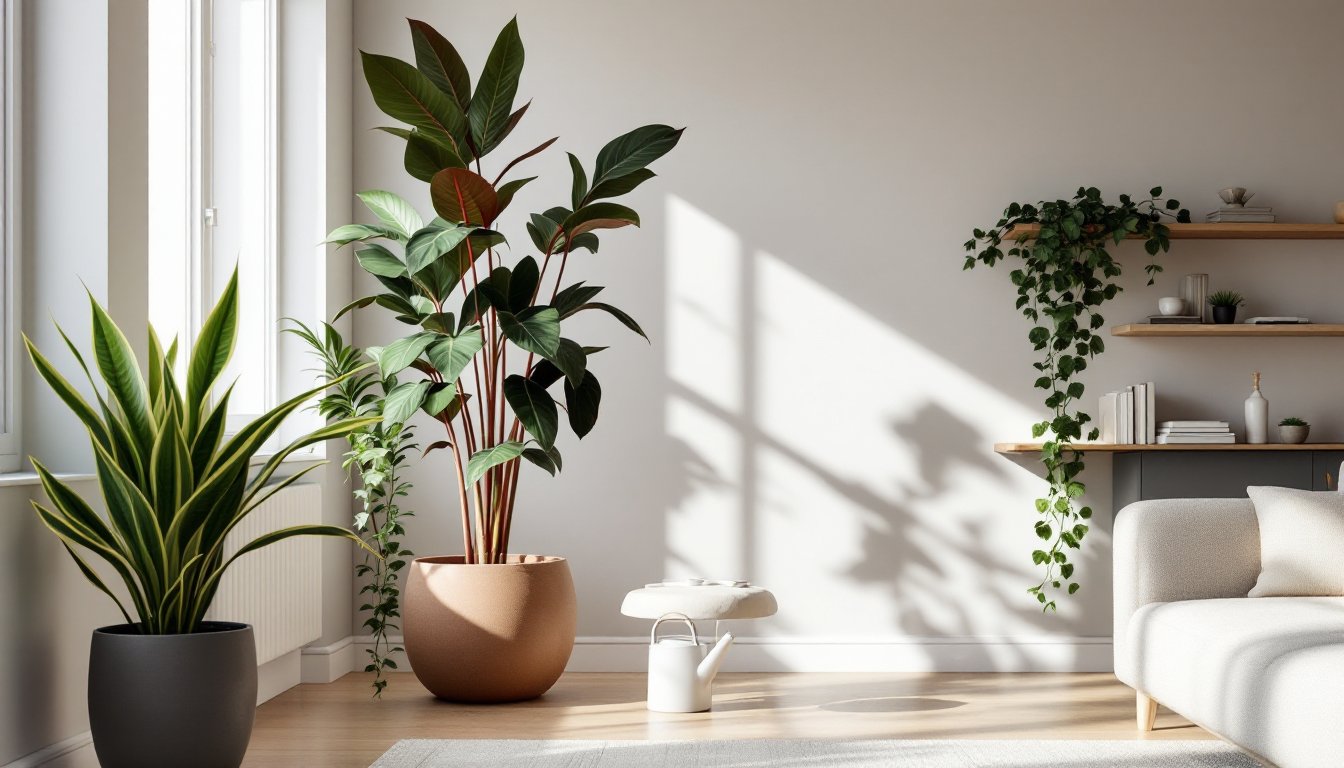
Corners: Large plants soften hard angles and fill empty vertical space. Place a 6-foot dracaena or snake plant in a corner 8–12 feet from a window. The plant becomes a focal point while receiving adequate diffused light. Use a tall planter or pot stand to elevate shorter varieties.
Entryways and Hallways: If your entry receives indirect light, a statement plant makes a strong first impression. Ensure the space is wide enough for safe passage, leave at least 36 inches clearance for walkways per accessibility standards. Sansevieria works well here since it tolerates temperature fluctuations from opening doors.
Bathrooms: Humidity from showers benefits many tropical species, but only if the bathroom has a window, even a frosted one. Place pothos or philodendron on a shelf or in a hanging planter where steam reaches the foliage. Avoid placing plants directly above bathtubs where they could fall and cause injury.
Bedrooms: Snake plants and other CAM photosynthesis species release oxygen at night, making them suitable bedside companions. Position them within 5–10 feet of a window or supplement with a small grow light on a timer. Studies from leading home improvement resources suggest that indoor greenery contributes to better sleep quality and reduced stress.
Living Rooms and Offices: Anchor a seating area or desk space with a large plant behind a sofa or beside a bookshelf. Use decorative cache pots (outer containers without drainage) to match your décor, but always keep the plant in its nursery pot with drainage inside the cache pot. This allows easy removal for watering and prevents water damage to furniture.
Rotation Strategy: If your space is truly dim, rotate plants every 2–3 weeks between a low-light location and a brighter spot to sustain health. Mark the calendar to stay consistent.
Scale and Proportion: Match plant size to room dimensions. A 7-foot plant in a 10×10 room overwhelms: it thrives in a room with 10–12 foot ceilings and at least 150 square feet of floor space. Conversely, a 3-foot plant gets lost in a double-height entryway, go for bold statement plants like monstera or large dracaena cultivars.
Container Considerations: Large plants need stable bases. Choose pots with a width at least one-third the plant’s height to prevent tipping. For plants taller than 5 feet, consider weighted bases or saucers filled with decorative stones for added stability. Ensure containers have drainage: if using decorative pots without holes, double-pot by nesting a draining nursery pot inside.
Floor Protection: Place a waterproof saucer or plant mat under every pot to protect hardwood, tile, or carpet from water damage. Cork mats or rubber trays work well and are unobtrusive.
Large low-light indoor plants prove that dim spaces aren’t destined to stay bare. With the right species and basic care adjustments, even the shadiest corner can support thriving greenery that anchors your interior and improves air quality year-round.