Tiny houses promise freedom, simplicity, and a smaller mortgage. But the actual cost? That depends on whether you’re swinging a hammer yourself or cutting a check to a builder. In 2026, a professionally built tiny home on wheels runs anywhere from $50,000 to $150,000, while DIY builds can dip as low as $15,000 if you’re resourceful and patient. Before dreaming of downsized living, you need a clear picture of what you’ll spend, not just on the structure, but on land, utilities, permits, and the dozen other expenses that sneak up on new buyers.
Table of Contents
ToggleKey Takeaways
- The cost to buy a tiny house ranges from $15,000 for DIY builds to $150,000 for professionally built models, with move-in-ready units typically averaging $60,000 to $80,000 in 2026.
- Hidden costs including land ($10,000–$100,000+), permits ($500–$2,000), site prep ($5,000–$25,000), and utilities can easily add $30,000–$100,000+ to the sticker price.
- DIY tiny house projects offer significant savings but require 6–18 months of work, specialized tools, and skills in carpentry and electrical systems to avoid costly mistakes.
- Foundation-based tiny houses cost more ($80,000–$120,000) than trailers due to permanent foundations, site work, and local building code compliance requirements.
- Alternative financing options like RV loans (4–9%), personal loans (7–15%), or home equity lines of credit are necessary since traditional mortgages rarely cover tiny houses.
- Regional pricing varies significantly, with Pacific Northwest and Northeast builders charging 10–20% more than Southern or Midwest counterparts due to labor and material costs.
Average Tiny House Costs: What to Expect
Most tiny houses fall into two camps: RVIA-certified trailers (typically under 400 square feet) and foundation-based models that resemble traditional dwellings but scaled down. The average cost for a move-in-ready tiny house on wheels sits around $60,000 to $80,000 as of 2026, according to builder surveys and real estate trend reports.
Foundation models usually start higher, $80,000 to $120,000, because they require site work, a permanent foundation (slab, crawl space, or pier-and-beam), and compliance with local residential building codes. If you’re buying land separately, add $20,000 to $100,000+ depending on location, access to utilities, and whether the parcel is zoned for tiny homes.
Size and finish level drive the price spread. A bare-bones 200-square-foot shell with basic fixtures costs far less than a 400-square-foot unit with hardwood floors, quartz counters, a composting toilet, and custom cabinetry. Expect to pay $150 to $400 per square foot for professionally built models, with luxury builds pushing past $500 per square foot.
Regional pricing matters. Builders in the Pacific Northwest and Northeast charge 10–20% more than those in the South or Midwest due to labor costs, material shipping, and local code requirements. Always get quotes from multiple builders and clarify what’s included: appliances, hookups, delivery, and setup can add $5,000 to $15,000 to the sticker price.
DIY Tiny House Costs vs. Professionally Built Models
Building Your Own Tiny House
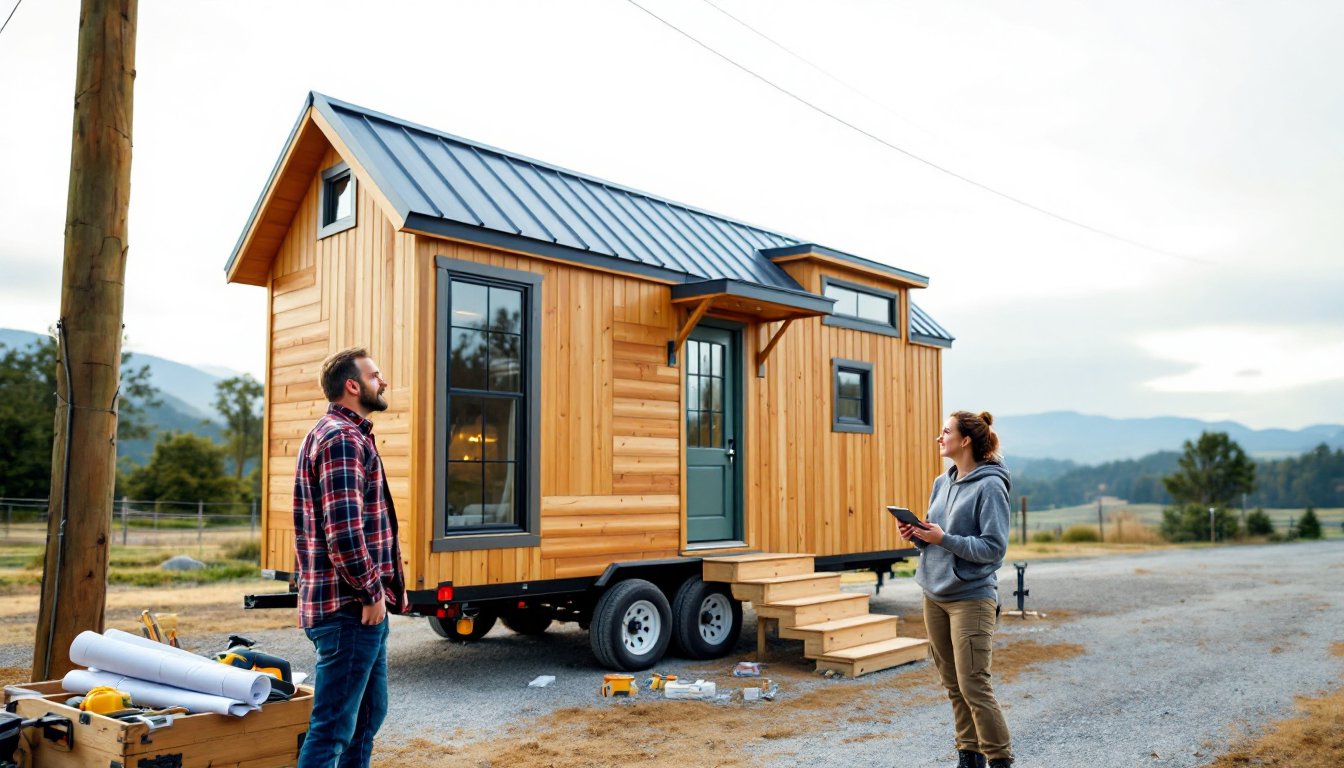
A DIY build offers the biggest cost savings, if you have the time, skills, and a high tolerance for problem-solving. Budget-conscious builders report total costs between $15,000 and $40,000 for a livable tiny house on a trailer, though most land closer to $30,000 once you factor in tools, mistakes, and upgrades.
Key DIY cost categories:
- Trailer: $4,000–$7,000 for a new dual-axle tiny house trailer rated for 10,000–14,000 lbs. Used trailers can save $1,000–$2,000 but inspect frame integrity and axle condition carefully.
- Framing and shell: $6,000–$12,000 for lumber (2×4 studs, 2×6 floor joists, plywood sheathing, rigid foam insulation, metal roofing). Actual dimensions matter, 2x4s are 1.5″ x 3.5″, so plan stud spacing at 16″ or 24″ on center for structural support and insulation bays.
- Windows and doors: $1,500–$4,000. RV or tiny-house-specific windows reduce weight and improve insulation but cost more than standard residential units.
- Electrical and plumbing: $2,000–$5,000 for wire (12/2 and 14/2 Romex), breaker panel, PEX tubing, fixtures, and a water heater. If you’re not licensed, hire an electrician for the panel hookup and final inspection, NEC compliance isn’t optional, and most jurisdictions require permits for electrical work.
- Interior finishes: $3,000–$8,000 for flooring (luxury vinyl plank or tongue-and-groove pine), drywall or shiplap, paint, cabinets, and countertops.
DIY pros: Total control over design, materials, and budget. You can source reclaimed lumber, salvage windows, and swap labor with friends.
DIY cons: Builds often take 6–18 months working weekends. Mistakes, underestimating weight, improper flashing, or miscalculating roof pitch, can cost thousands to fix. You’ll need a circular saw, drill, jigsaw, framing nailer, and ideally a compound miter saw for trim work. Renting a scaffolding or telehandler for roof work adds $200–$500.
Buying a Prefab or Custom-Built Tiny House
Prefab and custom-built models deliver faster timelines and professional finish quality, but at a premium. Prefab units (built in a factory, delivered to your site) range from $45,000 to $90,000 for standard floor plans. Customization, adding a loft, upgrading appliances, or specifying exterior siding, adds 10–30% to the base price.
Custom builds start around $70,000 and climb quickly. A builder will work from your design, handle permits, and deliver a turnkey home, but expect 4–8 months lead time and deposits of 25–50% upfront. Many builders include delivery within 500 miles: beyond that, budget $2–$4 per mile.
Prefab/custom pros: Warranty coverage (typically 1 year on structure, longer on appliances), code compliance handled by the builder, and no need to learn advanced carpentry or electrical work.
Prefab/custom cons: Less design flexibility with prefabs, and you’re trusting someone else’s craftsmanship. Inspect the build in person before final payment, check for plumb walls, level floors, properly sealed windows, and functional systems.
Hidden Costs and Additional Expenses to Consider
The sticker price rarely tells the full story. Here’s what catches buyers off guard:
Land and site prep: If you don’t already own a parcel, land costs vary wildly, $10,000 for rural acreage in the Midwest to $100,000+ near metro areas. Site prep (grading, gravel pad, septic or sewer hookup, electric service trenching) can run $5,000 to $25,000. Off-grid setups (solar panels, battery bank, composting toilet, rainwater collection) add another $10,000–$30,000 depending on capacity.
Permits and inspections: Tiny houses on wheels often occupy a gray area. Some jurisdictions classify them as RVs (no building permit, but restricted to RV parks). Foundation models require building permits ($500–$2,000), and inspections for framing, electrical, plumbing, and final occupancy. If your county doesn’t have tiny-house-friendly zoning, you may face legal hurdles or need a variance ($1,000+ in fees and attorney time).
Insurance: Tiny house insurance isn’t always straightforward. RV-style policies cost $600–$1,200/year but may not cover custom builds or full replacement value. Foundation models might qualify for standard homeowners insurance, which averages $800–$1,500/year depending on location and coverage limits. Shop around and get coverage in writing before closing.
Utilities and ongoing costs: Monthly expenses vary by setup. A tiny house in an RV park might pay $400–$800/month for the lot, water, sewer, and electric. On private land with full hookups, budget $100–$300/month for utilities. Off-grid living cuts monthly bills but front-loads costs for solar, propane, and maintenance.
Furniture and appliances: Don’t forget the interior. Compact appliances (apartment-size fridge, two-burner cooktop, ventless washer/dryer combo) cost $2,000–$5,000. Space-saving furniture, storage solutions, and decor add another $1,500–$4,000. Many tiny house bedrooms rely on custom-built storage and lofted sleeping areas to maximize every square foot.
Transportation and setup: If you’re buying a house on wheels, factor in delivery or towing costs. Professional transport runs $3–$5 per mile: towing it yourself requires a heavy-duty truck (3/4-ton or larger) and experience handling a wide, tall load. Setup fees (leveling, blocking, skirting) add $500–$1,500.
Financing Options for Your Tiny House Purchase
Traditional mortgages don’t usually cover tiny houses, especially those on trailers. Lenders view them as personal property, not real estate, so you’ll need alternative financing.
RV loans are the most common route for tiny houses on wheels. Rates range from 4% to 9% depending on credit score, and terms stretch from 5 to 15 years. Loan amounts typically cap at $100,000. You’ll need the tiny house titled as an RV and often an RVIA certification to qualify.
Personal loans work for smaller builds or DIY projects. Rates run higher, 7% to 15%, and terms max out around 7 years, but approval is faster and doesn’t require the home to meet RV standards. Borrow only what you need: interest adds up quickly on unsecured debt.
Chattel loans (personal property loans) are designed for manufactured homes and sometimes cover tiny houses. Rates and terms fall between RV and personal loans, but availability varies by lender.
Home equity loans or HELOCs offer the lowest rates if you own another property. Tap into existing equity at 5% to 8% and use the funds for your tiny house. Just remember, you’re putting your primary residence up as collateral.
Cash and crowdfunding remain popular in the tiny house community. Many home renovation platforms provide cost calculators and budgeting tools to help DIYers save systematically. Some builders crowdfund their projects or finance through peer-to-peer lenders, though this requires a compelling story and social media savvy.
Before signing, read the fine print. Some lenders prohibit full-time living or require the home to remain on a permanent foundation. Others impose geographic restrictions or mandate insurance minimums. Compare at least three lenders and calculate total interest paid over the loan term, not just the monthly payment.
Conclusion
Buying a tiny house isn’t just about the shell, it’s land, permits, utilities, and a dozen other line items that add up fast. Whether you’re building your own for $30,000 or buying a custom model at $100,000, budget for the hidden costs and financing realities. Do your assignments on zoning, get multiple quotes, and don’t skip permits or insurance. Tiny living offers real financial and lifestyle benefits, but only if you plan for the full price tag from day one.