Placing a houseplant on a shelf and hoping for the best rarely works out. Plants have specific needs, light, humidity, temperature, and where they live in a home determines whether they thrive or slowly decline. The difference between a lush fiddle leaf fig and a crispy brown one often comes down to placement, not watering frequency. This guide breaks down the best locations for plants in each room, matching environmental conditions to plant requirements so homeowners can stop guessing and start growing.
Table of Contents
ToggleKey Takeaways
- Where to put plants in your house depends primarily on light requirements—test your space’s light level at midday using the hand shadow method to match plant needs to location.
- Living rooms work best for tall plants in corners or trailing plants on console tables, while kitchens should position herbs on south or west-facing windowsills to avoid heat and grease damage.
- Bathrooms’ high humidity (50-70% after showers) makes them ideal for ferns and orchids, while windowless bathrooms can still support plants using full-spectrum LED grow lights on timers.
- Bedrooms favor low-maintenance, compact plants like pothos and snake plants on nightstands, avoiding strongly scented species that can overwhelm enclosed spaces.
- Small spaces benefit from vertical plant placement using wall-mounted shelves, hanging planters from ceiling joists, and corner floor stands to maximize square footage without sacrificing light access.
- Successful houseplant placement requires evaluating light, humidity, temperature, and watering access rather than simply placing plants wherever space allows.
Understanding Light Requirements Before You Place Your Plants
Light dictates where a plant can survive. Before picking a spot, homeowners need to understand the three main categories: direct light (unfiltered sun hitting leaves for 4+ hours daily), bright indirect light (strong light that doesn’t directly hit foliage), and low light (areas away from windows or north-facing exposures).
Most flowering plants and succulents need direct or bright indirect light. South-facing windows deliver the most intense light in the Northern Hemisphere, while east-facing windows provide gentle morning sun. West-facing windows get hot afternoon light, which can scorch sensitive foliage. North-facing windows offer the lowest light levels, suitable only for shade-tolerant species like pothos or snake plants.
A simple test: hold a hand between the window and the proposed plant spot at midday. A sharp, defined shadow means bright light. A soft, blurry shadow indicates moderate light. No visible shadow signals low light. This quick check helps match plant needs to real conditions, especially in rooms with multiple windows or obstacles like trees and overhangs that block sun.
Best Places for Plants in the Living Room
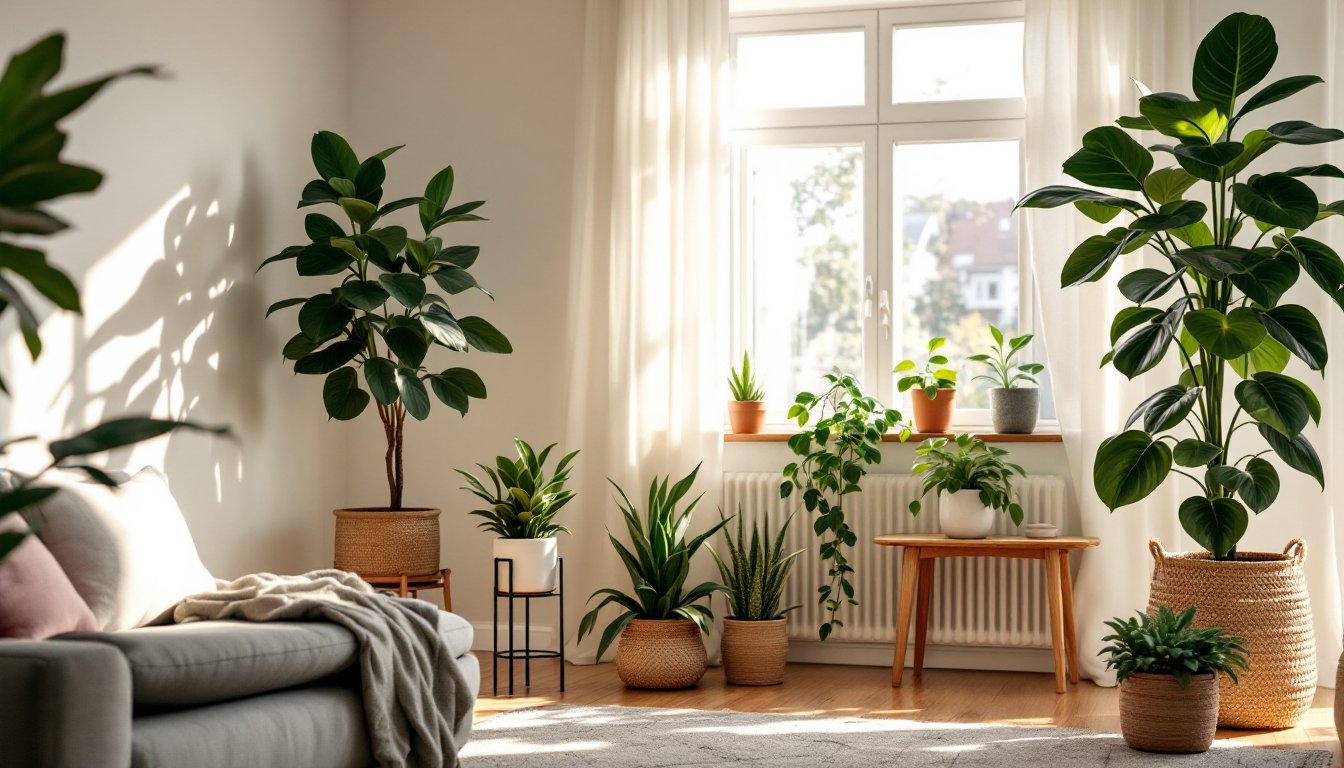
Living rooms typically offer the most floor space and varied light conditions, making them ideal for larger specimens. Corner placements work well for tall plants like fiddle leaf figs, bird of paradise, or dracaena, they fill vertical space without blocking pathways. Position these at least 2-3 feet from windows if they prefer bright indirect light.
Console tables and sideboards behind sofas create natural display zones for medium-sized plants. This elevation improves air circulation and keeps foliage away from curious pets or toddlers. Trailing plants like pothos or philodendrons look sharp here, with vines cascading down furniture sides.
Windowsills accommodate smaller pots, herbs, succulents, or compact flowering indoor varieties that need maximum light. Make sure the sill is wide enough (at least 4 inches) and that radiators below won’t blast hot air directly at roots during winter. Living room humidity usually sits around 30-40%, which suits most tropical houseplants as long as they’re not placed near heating vents or fireplaces.
Avoid tucking plants into dark corners far from windows unless they’re certified low-light survivors. Even snake plants and ZZ plants need some ambient light to maintain growth. For rooms with limited natural light, consider adding a grow light on a timer, full-spectrum LED bulbs work well and don’t generate excessive heat.
Where to Position Plants in Your Bedroom for Better Sleep
Bedroom plant placement balances aesthetics with practicality. Contrary to old myths, plants don’t steal oxygen at night, they release small amounts of CO₂ during respiration, but the impact is negligible. Many species actually improve air quality, making them bedroom-appropriate.
Nightstands suit compact, low-maintenance plants like snake plants or pothos. These need minimal light and won’t require frequent watering that could risk spills near electronics. Keep pots on coasters or small trays to catch drainage.
Dresser tops offer more space for medium-sized plants, but avoid placing them where they’ll obstruct mirrors or get knocked over during morning routines. Easiest house plants like pothos or spider plants tolerate the lower light levels common in bedrooms.
Floor placement near windows works for larger plants like rubber trees or monsteras. These can handle the bedroom’s cooler nighttime temperatures (most homes drop to 65-68°F at night) better than smaller, more sensitive tropicals. Keep plants at least 1-2 feet from air vents to prevent drafts from drying out foliage.
Avoid strongly scented flowering plants in bedrooms, jasmine or gardenias can be overwhelming in enclosed spaces. Stick with foliage plants or those with subtle scents. Also skip plants that require high humidity unless a humidifier is already running, since bedrooms tend to be drier than bathrooms or kitchens.
Kitchen Plant Placement: Combining Function and Style
Kitchens offer unique advantages: consistent warmth, higher humidity from cooking, and often excellent light from multiple windows. But, placement requires careful thought to avoid interfering with food prep or safety.
Windowsills above sinks are prime real estate for herbs like basil, cilantro, or thyme. These need 6+ hours of direct light and benefit from the humidity and easy watering access. Use saucers to catch drainage and prevent water damage to sills. South or west-facing kitchen windows work best for herbs.
Open shelving can accommodate small potted plants, but keep them away from the stove and oven. Heat and grease buildup will damage foliage. Plants placed near cooking surfaces also accumulate oily residue that clogs stomata (leaf pores), reducing their ability to photosynthesize. If shelving is the only option, position plants on the coolest, least-used shelves, typically upper ones farthest from heat sources.
Countertops work if counter space isn’t at a premium. Place plants in corners or against backsplashes where they won’t interfere with cutting boards or appliances. Avoid areas near knife blocks or the edge where they could be knocked over. Homeowners seeking modern plant decor often cluster small pots in decorative trays for a cohesive look.
Top of refrigerators can house trailing plants or those that tolerate warmth, but remember that this spot is difficult to water and monitor. It’s also darker than it appears since the fridge blocks lower light. This placement works best for neglect-tolerant species like pothos or philodendrons. Kitchens average around 40-50% humidity from cooking, which most tropicals appreciate.
Bathroom Plants: Thriving in High-Humidity Spaces
Bathrooms mimic tropical conditions when showers run regularly, making them ideal for humidity-loving plants. But, light is often the limiting factor, many bathrooms have small windows or none at all.
Windowsills or counters near windows suit ferns, orchids, and calatheas, all of which crave humidity and bright indirect light. Bathrooms with frosted or textured glass still provide adequate light for these species. According to guidance on houseplant placement strategies, moisture-tolerant plants thrive when positioned near water sources.
Shower shelves or ledges (if structurally sound and away from direct spray) can support epiphytic plants like air plants or small orchids. These absorb moisture from the air and don’t need soil. Make sure any ledge can handle the weight of a pot plus water, 5-10 pounds for a small container. Check that grout or caulk around the ledge is in good condition to prevent water intrusion behind walls.
Vanity countertops work if there’s sufficient light and space away from toothbrushes and cosmetics. Smaller big leaf house plants like baby rubber plants or peperomias fit well here.
Windowless bathrooms can still support plants with artificial light. Install a full-spectrum LED bulb in the existing fixture or add a small grow light on a timer to provide 12-14 hours of light daily. Low-light tolerant plants like pothos or snake plants can survive with minimal supplemental light, but they won’t thrive or grow much. Bathrooms typically maintain 50-70% humidity after showers, which is excellent for tropical species but can also encourage mold on pots, use well-draining soil and containers with drainage holes.
Creative Plant Placement Ideas for Small Spaces and Corners
Small homes and apartments require vertical thinking. Floor space is limited, but walls, ceilings, and furniture offer untapped potential.
Wall-mounted planters or shelves maximize vertical space without consuming floor area. Use anchors rated for at least 20 pounds if mounting shelves that will hold multiple plants, soil and water add significant weight. Stagger shelf heights to create visual interest and ensure each plant gets adequate light. Resources like Gardenista offer inspiration for creative vertical garden designs.
Hanging planters from ceiling hooks work well for trailing species like string of pearls, spider plants, or pothos. Install hooks into ceiling joists or use toggle bolts rated for the weight of the planter, soil, and water (typically 10-15 pounds for a medium hanging basket). Position hangers near windows but out of traffic paths, walking into a hanging plant repeatedly damages foliage and frustrates homeowners.
Corner floor stands use awkward corners that furniture can’t fill. Tall, narrow plant stands create vertical displays without requiring wall anchors. These work well for large indoor house plants that need floor space but not a wide footprint.
Ladder shelves or tiered stands lean against walls and provide multiple levels for plant display. These are rental-friendly since they don’t require mounting hardware. Place smaller, light-hungry plants on upper tiers and shade-tolerant ones below.
Furniture tops, bookshelves, cabinets, armoires, offer display space if they’re sturdy and not in direct foot traffic. Test stability by pressing down firmly: if the furniture rocks or feels unstable, skip it. Taller furniture like bookshelves creates opportunities to showcase coolest house plants at varying heights. Plants also benefit from inspiration drawn from The Spruce, which provides extensive home decor and plant styling ideas.
Window tension rods can support lightweight hanging planters inside window frames, creating a living curtain effect. This works best with small pots (under 2 pounds each) and plants that tolerate the temperature fluctuations near glass.
Conclusion
Successful plant placement isn’t about cramming greenery into every available surface, it’s about matching plant needs to each room’s conditions. Light levels, humidity, temperature fluctuations, and practical access for watering all factor into whether a plant survives or struggles. By evaluating these variables room by room, homeowners create environments where plants don’t just live but actually thrive.