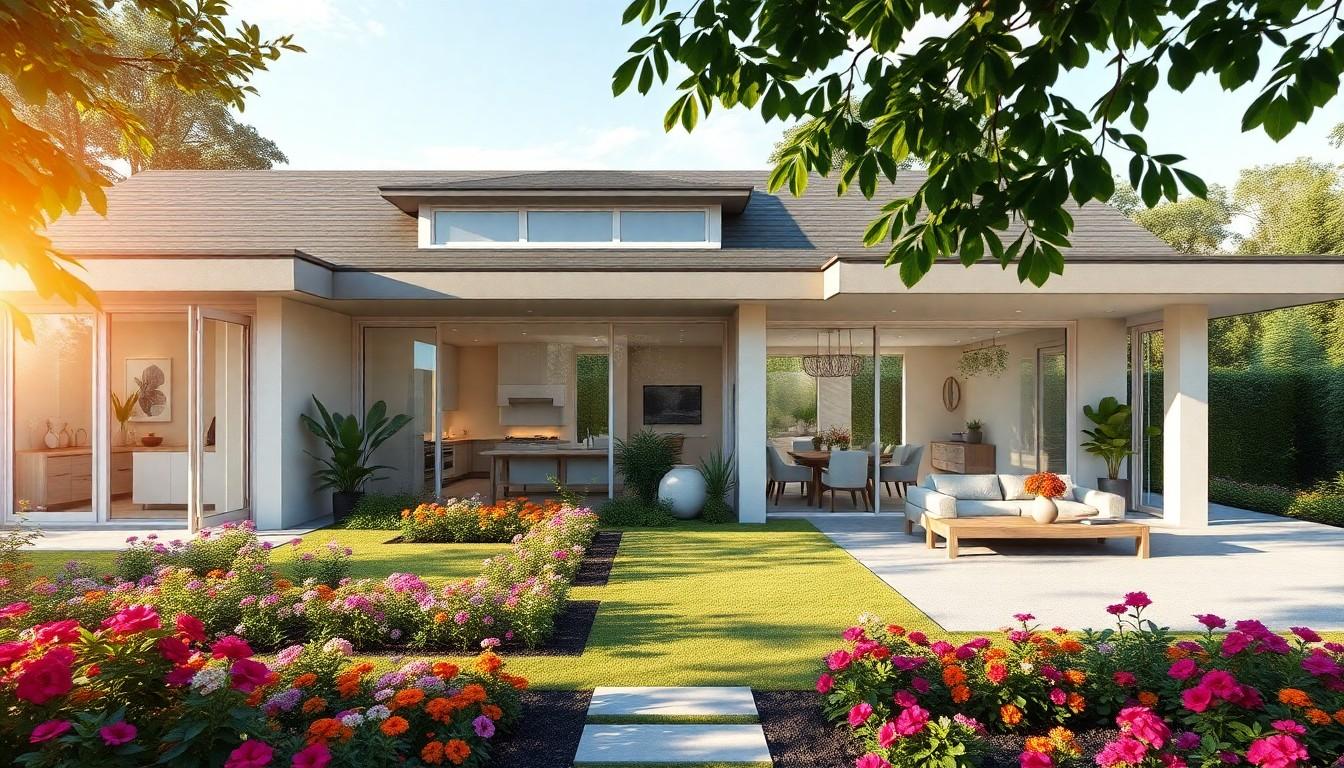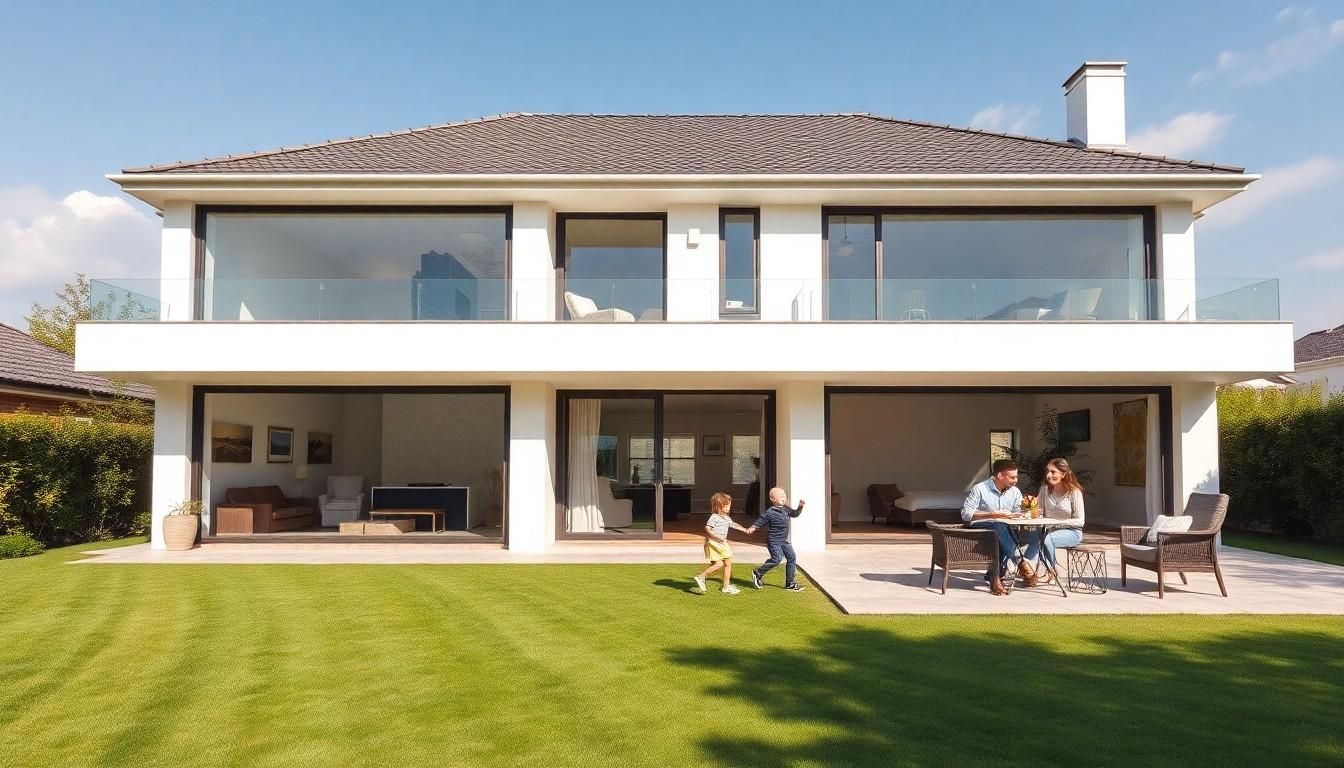
White houses have dominated American residential architecture for good reason: they’re versatile, timeless, and work across every architectural style from Colonial to contemporary. But a white exterior doesn’t mean boring. Modern white house color schemes combine crisp whites with strategic accent colors, natural materials, and bold contrasts to create homes that stand out. Whether someone’s repainting an existing home or finalizing selections for new construction, understanding how to layer whites with complementary colors makes the difference between flat and striking. The following combinations offer proven approaches that balance contemporary aesthetics with lasting appeal.
Table of Contents
ToggleKey Takeaways
- Modern white house color schemes gain impact through strategic layering of tones, accent colors, and natural materials rather than relying on white alone.
- White exteriors reduce energy costs by 15-20% in hot climates while offering superior paint durability and resale value benefits across all architectural styles.
- Black accents, wood elements, and colorful trim transform white houses from neutral to notable—keep bold colors to 10-15% of the exterior for balanced, market-appealing results.
- White paint undertones matter significantly: use warm whites (yellow/cream) on south/west-facing elevations and cool whites (blue/gray undertones) on north-facing sides and with gray roofing.
- Test paint colors on 24″×24″ boards across multiple elevations and times of day before committing, as white undertones reveal differently under varying natural light conditions.
Why White Remains the Ultimate Modern Exterior Choice
White paint reflects more light than any other color, keeping homes cooler in summer and reducing energy costs by as much as 15-20% in hot climates. That practical benefit pairs with aesthetic advantages: white serves as a neutral backdrop that highlights architectural details like trim profiles, window mullions, and roofline variations.
From a maintenance standpoint, exterior white paint formulations have improved dramatically. Modern acrylic latex paints with advanced resin technology resist yellowing, chalking, and dirt accumulation far better than oil-based predecessors. Brands like Benjamin Moore’s Aura Exterior and Sherwin-Williams’ Duration offer 25-year warranties when properly applied.
White also increases perceived home value. Appraisal studies consistently show that homes with white or light-colored exteriors photograph better in listings and appeal to broader buyer demographics. For DIYers planning to sell within 5-10 years, a well-executed white scheme offers one of the best returns on a paint investment.
The color works across architectural styles because it doesn’t compete with form. A Craftsman bungalow, mid-century ranch, and modern farmhouse can all wear white successfully when the undertones and accent colors align with the home’s design language.
Classic All-White Schemes with Contemporary Touches
A monochromatic white exterior creates impact through texture variation and subtle tonal shifts rather than color contrast. The key: choosing three shades from the same color family, typically a primary body color, a slightly brighter trim, and a door color that’s either crisper white or soft gray-white.
For the body, consider Benjamin Moore White Dove (OC-17) or Sherwin-Williams Alabaster (SW 7008). Both are warm whites with slight gray undertones that prevent the stark, institutional look of pure white. Use a brighter white like Benjamin Moore Decorator’s White (CC-20) for fascia, soffits, and window trim to add definition.
Textural variation matters enormously in all-white schemes. Pair smooth fiber cement siding with a standing-seam metal roof, or combine traditional clapboard with board-and-batten accents on gables. Stone foundations or brick chimneys provide natural tonal variation without introducing new colors.
Hardware and fixtures become focal points in monochromatic schemes. Matte black or oil-rubbed bronze light fixtures, house numbers, and door hardware create essential visual anchors. Modern homeowners are increasingly using black aluminum or steel-framed windows, which provide crisp lines against white walls, though these typically cost 20-30% more than standard vinyl windows.
White and Black: Bold Contrast for Modern Impact
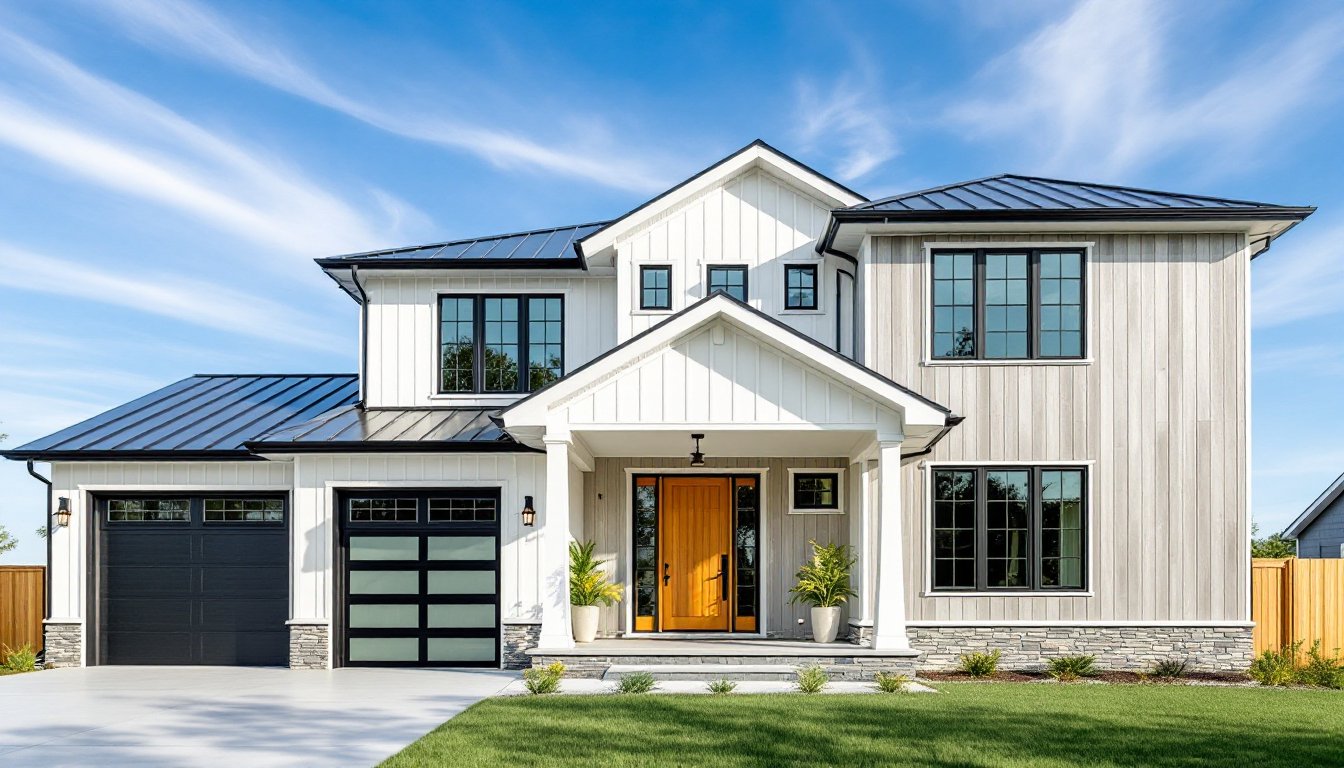
The white-and-black pairing delivers maximum contrast with minimal color complexity. This scheme works particularly well on modern farmhouse, contemporary, and Scandinavian-inspired architecture where clean lines dominate.
Application strategy: Use white as the primary body color (covering 70-80% of the exterior) and black for accent elements. Black works best on:
• Window frames and muntins
• Front door and garage doors
• Shutters (where architecturally appropriate)
• Fascia and soffit
• Metal roofing or architectural shingles in black or charcoal
For a dramatic modern look, some designers are painting entire accent walls or board-and-batten sections in black. This works on single-story ranches and split-levels but can overwhelm two-story homes unless balanced carefully.
Paint considerations: Black exterior surfaces absorb significant heat, reaching temperatures 40-50°F higher than white surfaces. On vinyl siding or trim, this can cause warping. Use only paints rated for dark colors (labeled with higher Light Reflectance Value or LRV ratings) on materials like vinyl. Fiber cement, wood, and metal handle black paint without heat-related issues.
The white-black combination benefits from a third neutral. Adding natural wood elements like cedar garage doors, entry doors with wood stain, or exposed rafter tails softens the stark contrast and introduces warmth.
White and Wood Accents: Warmth Meets Minimalism
Wood accents bridge the gap between modern minimalism and inviting warmth. This combination particularly suits mountain contemporary, modern farmhouse, and Pacific Northwest regional styles.
Best wood choices for exteriors:
• Cedar: Natural rot resistance, ages to silver-gray without finish, or maintains color with annual sealing
• Ipe: Extremely dense Brazilian hardwood, expensive but lasts 40+ years with minimal maintenance
• Thermally modified wood: Heat-treated pine or ash that resists rot and insects without chemicals
• Accoya: Acetylated wood with 50-year above-ground warranty, dimensionally stable
Strategic placement maximizes impact without overwhelming maintenance. Use natural wood on:
• Entry doors and sidelights
• Garage doors (real wood or high-quality faux wood composite)
• Vertical accent walls flanking entries
• Horizontal rain screen siding on upper gables
• Pergolas, arbors, and covered porch ceilings
Maintenance reality: Unsealed wood requires annual cleaning and re-sealing to prevent graying and checking. Many homeowners opt for the natural weathered look, accepting the silver-gray patina that develops over 2-3 years. If maintaining color matters, budget 3-5 hours annually per 100 square feet for cleaning and re-sealing.
The white-wood pairing allows for contemporary design inspiration through horizontal siding patterns, mixed material transitions at corners, and negative space details that emphasize the material contrast.
White with Colorful Trim: Adding Personality to Your Exterior
Colorful trim transforms a white house from neutral to notable. This approach works across architectural styles but requires restraint, the white body should remain dominant.
Color selection by style:
• Traditional/Colonial: Deep navy, forest green, or burgundy on shutters and door
• Coastal/Cottage: Soft aqua, coral, or weathered blue on doors and railings
• Modern Farmhouse: Charcoal gray or sage green on window trim and front door
• Spanish/Mediterranean: Terracotta, ochre, or cobalt blue accents
Application guidelines for balanced results:
Limit bold color to 10-15% of the exterior. That typically means the front door, shutters if present, and possibly garage door. Extending bright color to all trim and fascia overwhelms most residential designs.
Test colors in actual conditions. Purchase sample sizes (8 oz. typically covers 15-20 square feet) and paint 2’×2′ sections on different elevations. View morning and afternoon light for at least three days before committing.
Consider adjacent homes. While personal expression matters, a lime green door on a white Colonial might clash with neighboring traditional schemes. Resale value drops when exterior choices alienate broad buyer pools. Following proven exterior house color combinations helps balance personality with market appeal.
Finish matters: Use semi-gloss or gloss on doors and high-gloss on shutters. The sheen level intensifies color saturation and provides better moisture resistance on these high-contact, high-exposure surfaces.
Choosing the Right White Shade for Your Home’s Architecture
Not all whites work on all homes. White paint contains varied undertones, gray, yellow, blue, or pink, that respond differently to natural light and surrounding materials.
Undertone selection by factors:
Sun exposure: South- and west-facing elevations receive intense, warm light that can make cool whites appear bluish. Use warm whites with slight yellow or cream undertones (like Sherwin-Williams Ivory Lace or Benjamin Moore Swiss Coffee) on these elevations. North-facing sides receive cooler light: they handle pure whites without yellowing.
Roofing color: Gray or black roofs pair well with cool-toned whites that have blue or gray undertones. Brown or weathered wood roofs need warm whites to avoid visual clash. With a new roof selection, darker colors expand white paint options: lighter roofs limit contrast.
Foundation and hardscape: Homes with gray stone foundations or concrete driveways should use whites with gray undertones for cohesion. Brick foundations or warm-toned pavers need creamy whites.
Architectural trim details: Complex Victorian, Colonial, or Craftsman trim benefits from higher-contrast whites, a body color with more gray and a trim color that’s crisper. Simple modern forms work with subtle tonal variations.
Testing protocol for final selection:
- Order samples of 3-4 whites in the appropriate undertone family
- Paint 24″×24″ poster boards with two coats
- Mount boards on different elevations with painter’s tape
- Observe at 8 AM, noon, 4 PM, and dusk for 2-3 days
- Photograph each option, photos often reveal undertones the eye misses
Coverage calculations: White paint typically requires two coats over existing light colors, three over dark colors. One gallon covers 350-400 square feet per coat on smooth surfaces, 250-300 on textured siding. Rough cedar shingles may only yield 200 square feet per gallon.
Conclusion
Modern white exterior schemes succeed through thoughtful layering of tones, materials, and accents rather than relying on white alone. Whether choosing monochromatic sophistication, bold black contrast, warm wood elements, or colorful personality, the white foundation offers unmatched versatility. Proper surface prep, quality paint selection, and strategic color placement make the difference between a forgettable exterior and one that delivers lasting curb appeal.