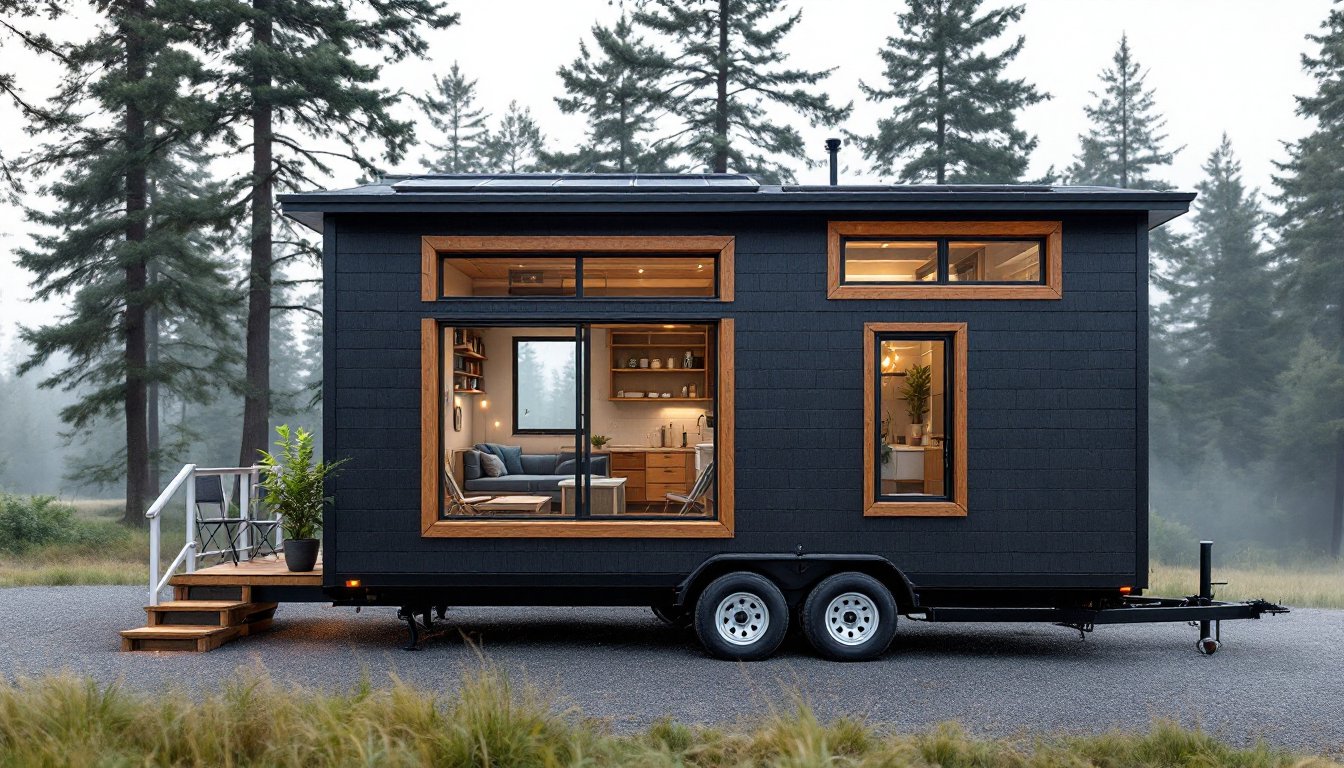
Downsizing to a tiny house isn’t just a trendy lifestyle choice, it’s a calculated shift toward financial freedom, simplified living, and environmental responsibility. As housing costs continue climbing in 2026, more builders and homeowners are embracing structures under 400 square feet. This guide walks through the real-world decisions involved in planning, constructing, and inhabiting a tiny home, from foundation choice to daily routines. Whether someone’s considering a RVIA-certified trailer or a permanent foundation build, understanding the trade-offs upfront saves money and headaches down the line.
Table of Contents
ToggleKey Takeaways
- A tiny house typically costs $50,000–$150,000 depending on whether you build it yourself or hire professionals, offering substantial savings compared to traditional mortgages that can exceed $2,500 monthly.
- Successful tiny house living relies on multi-use spaces, built-in storage solutions, and vertical design thinking to maximize every square foot while staying within trailer weight limits of 10,000–14,000 GVWR.
- Zoning regulations vary by location—many municipalities classify tiny houses on wheels as RVs, so researching local building codes and IRC requirements before purchasing land or a trailer is essential.
- A well-designed tiny house uses only 7% of the energy consumed by conventional homes, and solar arrays (1,200–2,400 watts) can achieve near-zero grid dependence in sunny climates.
- Daily life in a tiny house requires discipline through strict organization, meal planning, and a one-in-one-out rule for belongings to prevent clutter accumulation and maintain functionality.
- Key infrastructure choices—from composting toilets to on-demand water heaters and greywater systems—directly impact long-term sustainability and reduce dependence on traditional utilities.
Why I Chose the Tiny House Lifestyle
The decision to go tiny typically stems from three core motivations: financial relief, environmental impact, and intentional living. For many builders, the math is straightforward. Traditional mortgages in suburban markets can exceed $2,500 monthly, while a fully outfitted tiny house on wheels (THOW) averages $50,000–$80,000 if owner-built, or $100,000–$150,000 when professionally constructed. Eliminating or drastically reducing mortgage debt frees up income for travel, retirement savings, or career flexibility.
Environmental considerations also drive the shift. A 200-square-foot home uses roughly 7% of the energy consumed by a 2,600-square-foot conventional house, according to 2025 Department of Energy residential consumption data. Heating, cooling, and electricity costs drop proportionally. Builders who install solar arrays (often 1,200–2,400 watts for a tiny house) can achieve near-zero grid dependence in sunny climates.
Zoning and legal constraints are the biggest hurdles. Many municipalities classify tiny houses on wheels as recreational vehicles, limiting where they can be permanently parked. Foundation-based tiny homes must meet IRC (International Residential Code) minimum habitable room sizes, typically 70 square feet with at least one dimension of 7 feet, and ceiling heights of 6 feet 8 inches in habitable rooms. Some jurisdictions have adopted appendix-based tiny house codes, but many haven’t. Research local ordinances before purchasing land or a trailer.
Planning and Designing My Tiny House Layout
Effective tiny house design hinges on multi-use spaces and vertical thinking. Every square foot must earn its place. Start with a clear priority list: sleeping capacity, kitchen function, bathroom type (composting vs. traditional flush), and workspace needs. A common layout places the kitchen and bathroom on opposite ends with a living area in the center, but variations abound.
Floor plan software like SketchUp or specialized tools (Floorplanner, RoomSketcher) helps visualize furniture placement and traffic flow before framing begins. Standard trailer widths are 8 feet 6 inches: accounting for wall thickness (2×4 framing plus sheathing and siding totals roughly 8 inches), usable interior width drops to about 7 feet 10 inches. Length varies, 20, 24, or 28 feet are typical, but longer trailers require special towing permits in many states.
Loft bedrooms save floor space but demand careful headroom planning. A sleeping loft with 3 feet 6 inches of vertical clearance works for most adults, while the space below can reach the IRC-minimum 6 feet 8 inches for living areas. Ladder vs. staircase access is a personal trade-off: stairs consume more square footage but offer storage within each tread and safer daily use.
Maximizing Space with Smart Storage Solutions
Storage discipline separates functional tiny houses from cramped ones. Built-in solutions beat freestanding furniture every time. Install under-stair drawers (if using stairs to the loft), toe-kick drawers beneath kitchen cabinets, and overhead cabinets that extend to the ceiling. Use the space above doorways for shallow shelving, ideal for books or linens.
Furniture hacks make a significant difference in smaller homes. Murphy beds, fold-down desks, and nesting tables maintain flexibility. Bench seating with lift-top storage serves triple duty as seating, storage, and occasional guest sleeping. Magnetic knife strips, pegboards, and wall-mounted spice racks keep counters clear in galley kitchens, where counter space rarely exceeds 4 linear feet.
Vertical dividers inside cabinets, cutting boards, baking sheets, and lids stored on edge, double usable space compared to stacking. Vacuum-sealed bags compress seasonal clothing. Honestly assess belongings before the build: if the goal is 200 square feet, plan for roughly 2,000 pounds of personal items max, including furniture. Exceeding trailer weight ratings (typically 10,000–14,000 GVWR for tandem-axle models) creates safety and legal problems.
Building My Tiny House: DIY vs. Professional Help
DIY builds offer cost savings and customization but demand time, skill, and tool access. A competent DIYer with framing and finish carpentry experience can complete a shell in 400–600 hours. Full builds, including electrical, plumbing, and interior finish, range from 1,000 to 1,500 hours. Budget 12–18 months if working weekends and evenings.
Tools required include a circular saw or miter saw (miter saw delivers cleaner trim cuts), cordless drill/driver, jigsaw, table saw for ripping plywood, nail gun (framing and finish), and levels (2-foot and 4-foot). Rent specialty tools like a pneumatic stapler for underlayment or a spray rig for exterior finishes. Safety gear, gloves, goggles, ear protection, and a respirator for insulation and finish work, is non-negotiable.
Hiring professionals makes sense for specific trades. Licensed electricians ensure NEC (National Electrical Code) compliance, critical if connecting to grid power or reselling. Tiny houses typically use 100-amp service with a mix of 120V and, if installing electric heat or a dryer, 240V circuits. Plumbing, especially if integrating a traditional flush toilet and on-demand water heater, benefits from professional help to avoid leaks and code violations.
Permits depend on build type and location. Foundation tiny houses follow standard residential permitting. THOWs often skirt permits by claiming RV status, but this limits financing and insurance options. Some builders pursue RVIA certification (Recreational Vehicle Industry Association), which involves third-party inspections during construction. If planning to move the house frequently, certification simplifies campground and RV park acceptance.
Structural considerations differ from stick-built homes. Road vibration and wind shear during towing require hurricane ties at every rafter-to-wall connection, liquid nails plus screws (not just nails) on sheathing, and blocking between studs. Use construction adhesive on subfloor seams and tongue-and-groove ¾-inch plywood, not OSB, which degrades faster if moisture intrudes.
Essential Features That Make My Tiny House Feel Like Home
Comfort in a tiny house depends on quality finishes and thoughtful systems. Skimping on insulation or ventilation creates long-term misery. R-13 to R-21 wall insulation (depending on climate zone) using closed-cell spray foam, mineral wool, or high-density fiberglass keeps temperature swings manageable. Spray foam adds structural rigidity and air-sealing but costs more: mineral wool offers fire resistance and soundproofing.
Ventilation prevents mold and condensation. A bathroom exhaust fan (CFM rated for at least 50 in a small bath), range hood vented to the exterior, and at least one operable window per code minimum keep air moving. Many builders add a ceiling fan in the main living area for circulation.
Lighting sets the mood. Recessed LED canister lights save headroom compared to hanging fixtures. Install dimmers to adjust ambiance, critical in a single open-plan room. Under-cabinet LED strips in the kitchen improve task lighting without cluttering counters. Natural light from windows and skylights reduces daytime energy use: just ensure windows meet egress requirements if in a sleeping loft (5.7 square feet of opening, minimum 24-inch height and 20-inch width per IRC).
Appliances must balance function and power draw. A 24-inch or 30-inch range (propane or electric) fits most tiny kitchens. Compact refrigerators (10–12 cubic feet) suffice for one or two people. Combination washer-dryer units (ventless models) fit in closets but take 3–4 hours per load. Many tiny housers use laundromats or outdoor clotheslines. On-demand water heaters (propane models like Rinnai or Eccotemp) eliminate the need for a storage tank, freeing up 10–20 cubic feet.
Making tiny house bedrooms work requires smart furniture and calming design. Platforms with built-in storage, wall-mounted reading lights, and blackout curtains maximize the limited footprint without sacrificing comfort.
Sustainable Living Elements I Incorporated
Sustainability aligns naturally with tiny living. Solar power systems are the most popular off-grid upgrade. A basic 2,400-watt array with lithium iron phosphate (LiFePO4) batteries (400–600 amp-hours at 12V) costs $8,000–$12,000 installed and covers lighting, refrigeration, and electronics. Adding an inverter-charger allows shore power hookup when available and battery backup during cloudy stretches.
Water systems range from simple to complex. A 40–60 gallon freshwater tank supplies a week’s worth of conservative use (shower, dishes, drinking). Greywater (from sinks and shower) can drain to a 30–40 gallon holding tank for dump-station disposal or, where legal, to a simple drip irrigation system for landscaping. Blackwater (toilet waste) requires a separate holding tank unless using a composting toilet. Composting toilets (Nature’s Head, Sun-Mar) eliminate blackwater but need regular emptying and occasional odor management with peat moss or coconut coir.
Reclaimed and salvaged materials reduce costs and environmental impact. Barn wood for accent walls, reclaimed windows (test for lead paint if pre-1978), and salvaged fixtures add character. Just verify structural components like joists or beams aren’t compromised by rot or insect damage. Locally milled lumber avoids the embodied carbon of long-distance shipping.
Builders often incorporate ideas found through creative furniture modifications and budget-conscious DIY projects, which add personality without the premium price of custom cabinetry.
Daily Life in My Tiny House: What I’ve Learned
Living tiny is a daily exercise in discipline and routine. Clutter accumulates fast when there’s no spare closet to hide it. A strict one-in, one-out rule for belongings keeps possessions in check. Weekly purges of mail, packaging, and unused items prevent overflow.
Cooking in a galley kitchen demands organization. Meal planning reduces the need for a packed pantry. Store bulk staples (rice, beans, flour) in airtight containers that stack efficiently. Use drawer organizers and lazy Susans to access items in deep cabinets. Limited fridge space encourages fresh shopping and less food waste.
Privacy becomes a design consideration for couples or families. Curtains or sliding barn doors can section off sleeping areas. Headphones and agreed-upon quiet hours help manage shared space. Outdoor living, decks, patios, or awnings, effectively doubles usable square footage in good weather.
Maintenance is straightforward but constant. Roof seals and window caulking need annual inspection, especially on THOWs subject to road vibration. Check trailer bearings, tire pressure (usually 50–60 psi for load range D or E), and brake function before any move. Composting toilets require emptying every 4–8 weeks depending on use. Small problems, a leaky faucet, a sticking door, can’t be ignored in tight quarters: they become daily annoyances fast.
Social dynamics shift. Hosting dinner parties requires creativity when seating maxes out at four. Many tiny housers invest in quality outdoor furniture or belong to co-housing communities with shared common spaces. The trade-off is intentional: less space for stuff, more resources for experiences.
Financially, the savings are real but not automatic. Parking fees (if renting land), propane refills, and laundromat costs add up. Insurance for THOWs runs $600–$1,200 annually. But eliminating a mortgage or high rent leaves room for savings, travel, or career shifts that prioritize flexibility over income.