Not everyone has time to fuss with finicky ferns or wrestle with watering schedules. For busy homeowners who want greenery without the guilt of brown, wilted leaves, low maintenance house plants are the answer. These resilient varieties tolerate irregular watering, forgive neglect, and still manage to look good doing it. This guide covers the top easy-care plants that thrive indoors with minimal intervention, no green thumb required.
Table of Contents
ToggleKey Takeaways
- Low maintenance house plants like snake plants, pothos, and ZZ plants tolerate irregular watering, low light, and neglect, making them ideal for busy homeowners or beginners.
- The best low maintenance house plants share key traits: drought tolerance, adaptability to low light, slow growth rates, pest resistance, and flexible humidity requirements.
- Snake plants and ZZ plants store water in their leaves or rhizomes and need watering only every 2-4 weeks, while pothos can signal when it needs water by drooping slightly.
- Low light tolerant varieties such as cast iron plants, philodendrons, and dracaenas thrive in rooms without windows or dark corners, eliminating light as a barrier to indoor gardening.
- Overwatering is the most common cause of plant death, so always check soil moisture before watering and use pots with drainage holes to prevent root rot.
- Avoid the temptation to fertilize frequently or use garden soil indoors; low maintenance house plants thrive with monthly feeding during growing season and standard potting mix with added perlite for drainage.
What Makes a House Plant Low Maintenance?
A low maintenance house plant doesn’t demand constant attention or perfect conditions. These plants share a few key traits that make them forgiving for beginners or anyone with a packed schedule.
Drought tolerance tops the list. Plants like succulents and cacti store water in their leaves or stems, allowing them to survive weeks between waterings. Adaptability to low light is another crucial factor, many popular indoor plants evolved on forest floors where direct sun is scarce. They’ll tolerate north-facing windows or rooms without natural light.
Slow growth rate means less frequent repotting and pruning. Fast growers need regular maintenance to keep them in check, while slow growers can sit happily in the same pot for years. Pest resistance matters too: some plants naturally repel common indoor pests like spider mites or fungus gnats.
Finally, flexible humidity requirements are essential for most homes. While tropical plants often need misting or humidifiers, truly low maintenance options tolerate standard indoor humidity levels (30-50%) without complaint. If a plant survives inconsistent watering, dim corners, and dry air, it’s a winner.
Top Low Maintenance House Plants for Beginners
These three plants dominate the easy-care category. They tolerate neglect, adapt to various light conditions, and bounce back quickly from mistakes.
Snake Plant (Sansevieria)
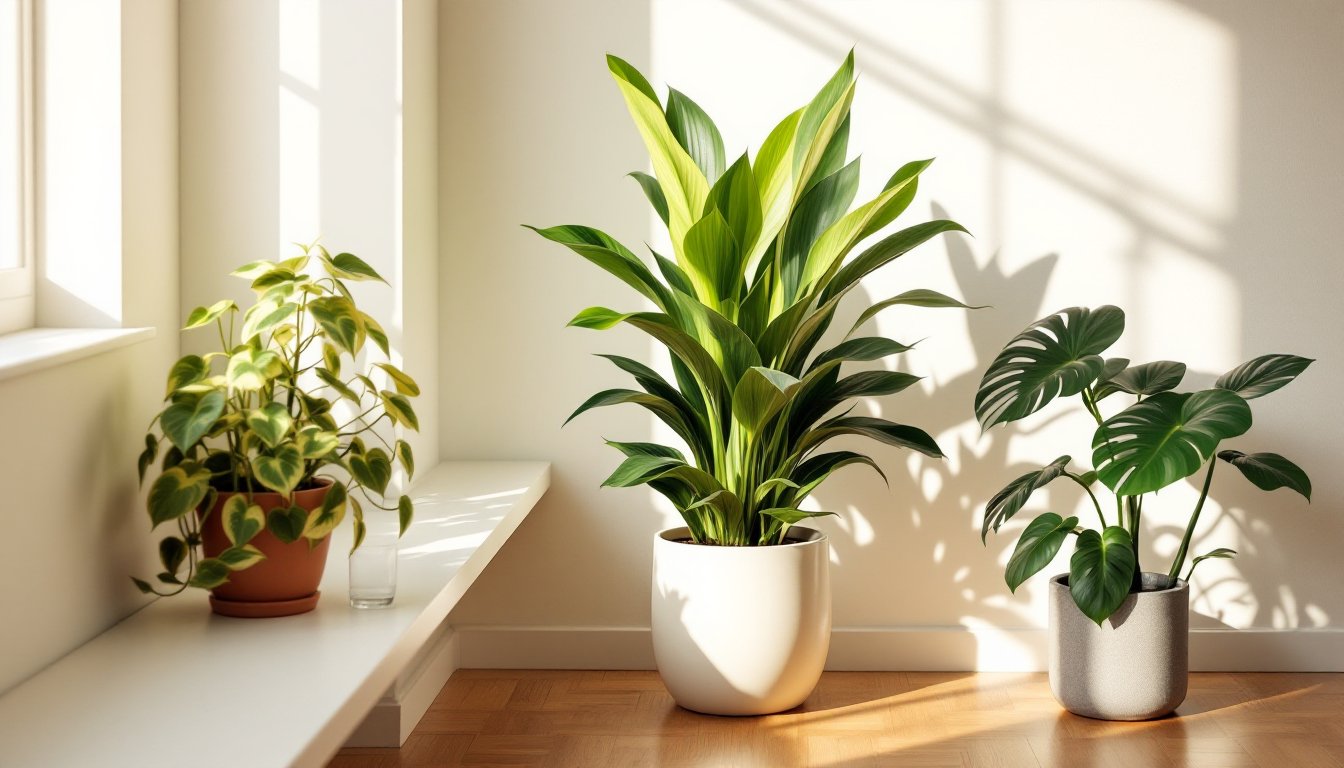
Snake plant (also called mother-in-law’s tongue) is nearly indestructible. Its stiff, upright leaves grow from a shallow root system and can handle anything from bright indirect light to dark corners. Watering needs are minimal, every 2-4 weeks depending on season and pot size.
The plant stores water in its thick, sword-like foliage, which means overwatering is the only real threat. Use well-draining soil (cactus mix works well) and ensure the pot has drainage holes. Snake plants also tolerate low humidity and temperature fluctuations, making them ideal for offices, basements, or drafty rooms.
Bonus: They’re effective air purifiers according to studies, removing toxins like formaldehyde and benzene. Varieties range from the classic green-and-yellow striped Sansevieria trifasciata to cylindrical types like Sansevieria cylindrica. Expect slow growth, maybe one or two new leaves per year.
Pothos (Epipremnum Aureum)
Pothos is the ultimate beginner vine. Its heart-shaped leaves cascade from shelves or climb moss poles with equal enthusiasm. This plant thrives in bright indirect light but tolerates low light surprisingly well, though variegated varieties (golden, marble queen) may lose their patterning in dimmer spots.
Water when the top inch of soil feels dry, roughly once a week in summer and every 10-14 days in winter. Pothos signals thirst by drooping slightly, then perks up within hours of watering. It’s nearly impossible to kill unless you overwater consistently.
Pothos propagates easily from stem cuttings placed in water, making it a budget-friendly way to fill multiple rooms. It tolerates average household humidity and temperatures between 60-85°F. Keep it away from pets, it’s toxic if ingested.
ZZ Plant (Zamioculcas Zamiifolia)
ZZ plant looks almost fake with its glossy, dark green leaflets arranged along thick stems. It’s one of the most drought-tolerant house plants available, storing water in potato-like rhizomes below the soil surface. Water sparingly, every 2-3 weeks in growing season, monthly in winter.
This plant adapts to fluorescent office lighting or natural indirect light with equal success. It grows slowly, which means minimal pruning and infrequent repotting (every 2-3 years). The waxy leaves naturally repel dust and pests.
ZZ plants tolerate temperatures down to 45°F and humidity as low as 30%. Use a pot with drainage and standard potting soil mixed with perlite for extra drainage. Yellow leaves usually indicate overwatering, cut back immediately if you notice this.
Best Low Light House Plants That Thrive on Neglect
Some plants not only tolerate low light, they prefer it. These options work in rooms without windows, north-facing spaces, or corners far from natural light sources.
Cast iron plant (Aspidistra elatior) earned its name by surviving Victorian parlors filled with gas lamp fumes and neglect. It handles deep shade, irregular watering, and temperature swings. Growth is glacial, but the dark green, strap-like leaves add texture to dim spaces. Water when soil is mostly dry, every 2-3 weeks.
Philodendron varieties (heartleaf, Brasil) rival pothos for ease of care. They tolerate low light better than most vining plants, though growth slows in darker conditions. Similar plant families often have comparable care requirements, making it easy to build a collection once you master one type. Water when the top 2 inches of soil dry out. These plants climb or trail depending on support, making them versatile for different displays.
Dracaena species come in various forms, from the spiky Dracaena marginata to the broader-leaved Dracaena fragrans. Most tolerate low to medium light and need watering only when soil is dry 2-3 inches down. They grow slowly and can reach 4-6 feet indoors over several years. Brown leaf tips often indicate fluoride or chlorine sensitivity, use filtered water if this occurs.
Chinese evergreen (Aglaonema) offers colorful foliage even in low light. Varieties range from silver-spotted to pink-edged leaves. It prefers consistent moisture but tolerates occasional drying out. Keep away from cold drafts and maintain temperatures above 60°F.
These low light tolerant options expand possibilities for darker rooms where most plants would struggle. Pair them with occasional exposure to brighter light if possible, but they’ll survive months in dim conditions.
Essential Care Tips for Low Maintenance House Plants
Even easy plants need basic care to thrive. Follow these guidelines to prevent the most common mistakes.
Watering: More house plants die from overwatering than underwatering. Always check soil moisture before watering, stick your finger 1-2 inches into the soil. If it’s damp, wait. Most low maintenance plants prefer to dry out between waterings. Use pots with drainage holes and empty saucers after watering to prevent root rot.
Soil and drainage: Standard potting mix works for most plants, but add perlite or coarse sand (1 part to 3 parts soil) for succulents, cacti, and other drought-tolerant varieties. Never use garden soil indoors, it compacts and drains poorly in containers.
Light placement: “Low light” doesn’t mean no light. Most plants need at least ambient room light to photosynthesize. Place them within 5-8 feet of a window, or supplement with grow lights if natural light is limited. Rotate plants quarterly to ensure even growth.
Fertilizing: Low maintenance plants have modest nutritional needs. Feed monthly during growing season (spring/summer) with diluted liquid fertilizer at half the package strength. Skip fertilizing in fall and winter when growth slows. Overfertilizing causes salt buildup and root damage.
Cleaning: Dust blocks light absorption. Wipe leaves with a damp cloth monthly, or rinse plants in the shower (lukewarm water, gentle spray). This also helps prevent pest infestations.
Repotting: Most slow-growing plants need repotting every 2-3 years. Signs include roots emerging from drainage holes, water running straight through without absorbing, or severely slowed growth. Move up one pot size (2 inches wider in diameter).
Pest management: Inspect plants monthly for spider mites, mealybugs, or scale. Isolate affected plants immediately. Treat with insecticidal soap or neem oil solution, repeating weekly until pests are gone. Good air circulation and avoiding overwatering prevent most pest problems.
For anyone exploring different plant types beyond the basics, these care principles apply universally. Many succulent varieties require even less intervention than traditional house plants. Similarly, cactus options offer extreme drought tolerance with unique sculptural forms. Building a collection of easy-care greenery becomes simple once you understand these core concepts.
Safety note: Many common house plants are toxic to pets and children if ingested. Research each plant before bringing it home, and keep potentially harmful varieties out of reach. The ASPCA maintains a comprehensive database of toxic and non-toxic plants.
Low maintenance doesn’t mean zero maintenance, but these plants forgive missed waterings, tolerate less-than-ideal conditions, and reward minimal effort with years of greenery. They’re the perfect starting point for new plant owners or busy households looking to add life to their spaces without adding stress.