The front of a house is more than just an entrance, it’s the first impression every visitor, neighbor, and passerby gets of the home. Choosing the right front yard landscaping plants can turn a forgettable facade into a standout statement that boosts property value and pride of ownership. But not all plants are created equal. The best plants for front of house combine visual impact with practical resilience: they need to handle foot traffic, survive fluctuating sun exposure, and look good all year without demanding a full-time groundskeeper. This guide walks through evergreens, flowering perennials, ground covers, and selection strategies tailored to different home styles and site conditions.
Table of Contents
ToggleKey Takeaways
- Quality landscaping with the best plants for front of house can increase home value by up to 10%, with front-yard improvements showing the highest return on investment.
- Evergreen shrubs like boxwood, inkberry holly, and nandina provide year-round structure and anchor the design, while flowering perennials such as daylilies and coneflowers add seasonal color with minimal maintenance.
- Low-maintenance ground covers like creeping thyme, ajuga, and sedum suppress weeds, reduce mulch needs, and soften hardscape edges along walkways and borders.
- Match plants to your home’s architectural style and sun exposure—traditional homes benefit from symmetrical boxwood plantings, while modern homes suit bold foliage textures and ornamental grasses.
- Proper soil preparation with 2–3 inches of compost, consistent watering during the first growing season, and strategic mulching set up front-of-house plantings for long-term success without excessive maintenance.
Why Front-of-House Plantings Matter for Curb Appeal
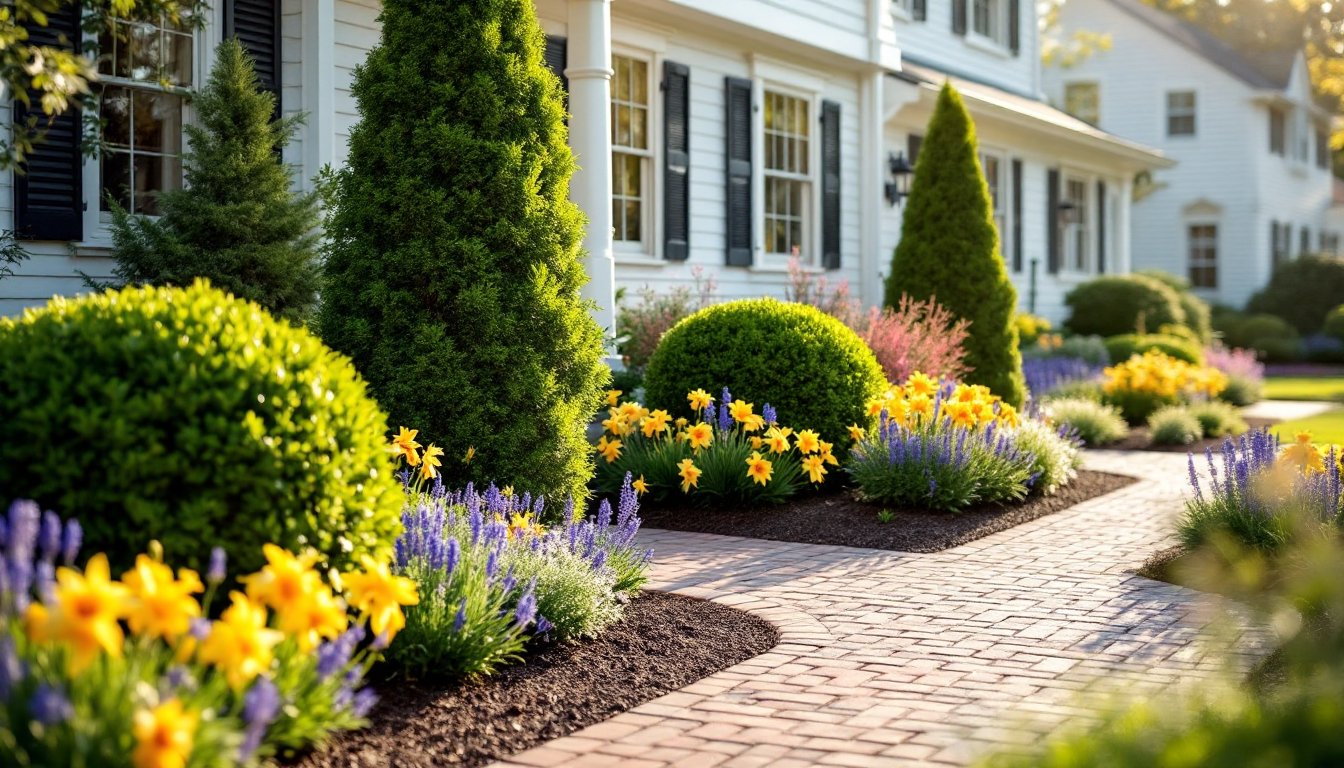
Real estate professionals call it curb appeal, but the impact goes deeper than market value. Front of house plants frame architecture, soften hard edges, and guide the eye toward entryways. A well-planted front yard signals care and attention, both to guests and to the homeowner walking through the door after a long day.
From a practical standpoint, strategic plantings reduce lawn maintenance, control erosion on slopes, and create privacy without the expense of fencing. A 2025 study from the National Association of Realtors found that quality landscaping can add up to 10% to a home’s appraised value, with front-yard improvements showing the highest return on investment.
Choosing low-maintenance plants for front of house isn’t about cutting corners, it’s about working smarter. Native and adapted species require less water, fewer chemicals, and minimal pruning once established. They’re also more resilient to local pests and weather extremes, which matters when plants are on display 365 days a year.
Top Evergreen Shrubs for Year-Round Front Yard Beauty
Evergreens are the backbone of any front house low maintenance landscaping plants plan. They provide structure when perennials go dormant and anchor the design through winter.
Boxwood (Buxus) remains a go-to for formal landscapes. Varieties like ‘Green Mountain’ reach 3–4 feet tall and tolerate partial shade and regular shearing. Boxwood works well flanking doorways or defining beds. Note that boxwood blight is a concern in humid climates, choose resistant cultivars like ‘North Star’ if disease pressure is high in the area.
Dwarf Alberta Spruce (Picea glauca ‘Conica’) offers tight, conical growth to about 6–8 feet over 10 years. It’s cold-hardy to USFS Zone 2 and handles full sun without browning. Use it as a focal accent or pair in symmetrical plantings for traditional homes.
Inkberry Holly (Ilex glabra) is an underrated native that thrives in Zones 5–9. Cultivars like ‘Gem Box’ stay compact (2–3 feet) and tolerate wet soils and salt spray, ideal for coastal or roadside plantings. The dark green foliage holds year-round, and it requires minimal pruning.
Nandina (Nandina domestica) brings multi-season interest with lacy foliage that shifts from green to red in fall. ‘Firepower’ and ‘Obsessed’ are non-invasive, clumping varieties that max out around 2–3 feet. Be aware that straight-species nandina is invasive in parts of the Southeast, always choose sterile or dwarf cultivars.
Evergreens establish best when planted in early spring or fall, giving roots time to grow before temperature extremes hit. Water deeply once a week for the first season, then taper off as plants acclimate.
Best Flowering Perennials to Add Color and Charm
Perennials come back year after year, making them cost-effective and lower-maintenance than annuals. The right front yard landscaping plants balance bloom time, height, and foliage texture.
Daylilies (Hemerocallis) are nearly indestructible. They handle full sun to part shade, drought, and poor soil, blooming prolifically from late spring through summer depending on variety. Newer reblooming cultivars like ‘Stella de Oro’ extend color into fall. Plant them 18–24 inches apart in clusters of three or five for visual impact.
Coneflower (Echinacea purpurea) is a native prairie perennial that thrives in Zones 3–9. It blooms mid-summer with long-lasting flowers in shades from purple to white and coral. Coneflowers attract pollinators and stand up well to heat and neglect. Deadhead spent blooms to encourage rebloom, or leave seed heads for winter interest and bird feed.
Black-Eyed Susan (Rudbeckia) provides bright yellow blooms from July through frost. It self-sows moderately, filling in gaps without becoming invasive. Pair it with ornamental grasses or evergreen shrubs for textural contrast.
Hostas (Hosta spp.) dominate shaded front yards. Varieties range from miniature (6 inches) to giant (3+ feet), with foliage in shades of green, blue, gold, and variegated patterns. ‘Sum and Substance’ and ‘Guacamole’ tolerate more sun than most hostas, making them versatile for mixed-exposure sites. Mulch heavily to retain moisture and deter slugs.
Salvia (Salvia nemorosa) offers vertical flower spikes in blue, purple, or pink from late spring into fall. ‘May Night’ is particularly reliable, staying compact (12–18 inches) and reblooming after shearing. It’s deer-resistant and drought-tolerant once established, making it a smart choice for landscaping plants for front beds with challenging conditions.
When planting perennials, amend the soil with 2–3 inches of compost worked into the top 6–8 inches. This improves drainage and provides slow-release nutrients. Water new plantings consistently through the first growing season, perennials need time to develop deep root systems.
Low-Maintenance Ground Covers for Front Yard Borders
Ground covers suppress weeds, reduce mulch needs, and soften hardscape edges. They’re especially useful along walkways, under shrubs, and on slopes where mowing is impractical.
Creeping Thyme (Thymus serpyllum) tolerates light foot traffic and releases a pleasant fragrance when brushed. It blooms pink or purple in early summer and stays under 3 inches tall. Creeping thyme thrives in full sun and well-drained soil, perfect for sunny borders and between pavers.
Ajuga (Ajuga reptans) spreads quickly in shade to part sun, forming a dense mat of glossy foliage topped with blue flower spikes in spring. ‘Chocolate Chip’ has smaller leaves and slower spread, while ‘Burgundy Glow’ offers variegated pink and white foliage. Ajuga can become aggressive in ideal conditions, use edging to contain it.
Sedum (Sedum spp.) is a succulent ground cover that handles drought, poor soil, and full sun. ‘Angelina’ glows chartreuse in summer and orange in fall, staying 3–6 inches tall. It’s a solid choice for plants in front beds where irrigation is minimal.
Pachysandra (Pachysandra terminalis) is the classic shade ground cover for traditional landscapes. It spreads via rhizomes and stays evergreen in Zones 4–9. ‘Green Sheen’ resists leaf blight better than older varieties. Pachysandra establishes slowly, plant plugs 6–8 inches apart and expect full coverage in two seasons.
Liriope (Liriope muscari) forms grassy clumps that work well as edging or mass plantings. It blooms lavender or white in late summer and tolerates deep shade, dry soil, and root competition from trees. ‘Big Blue’ and ‘Evergreen Giant’ are reliable performers that require no maintenance beyond an annual spring trim if desired.
Ground covers are often sold in flats of plugs or 4-inch pots. Calculate coverage by spacing, most ground covers need 6–12 inches between plants for full coverage within one to two growing seasons.
How to Choose Plants Based on Your Home’s Style and Sun Exposure
Plant selection should complement architecture and respect site conditions. Mismatched plants look forced and perform poorly, wasting time and money.
Home Style Considerations:
• Traditional/Colonial homes: Favor symmetry with matched plantings flanking the entrance. Use boxwood, hydrangeas, and roses for a classic look.
• Modern/Contemporary homes: Lean into bold foliage textures and sculptural forms. Try ornamental grasses, yuccas, and mass plantings of a single perennial for clean lines.
• Craftsman/Cottage homes: Mix informal groupings of flowering perennials, decorative shrubs, and vines. Daylilies, coneflowers, and climbing roses fit the aesthetic.
• Ranch homes: Use low, spreading shrubs and ground covers to avoid blocking windows. Junipers, spirea, and creeping phlox maintain horizontal proportions.
Sun Exposure:
Most front yards have mixed exposures, full sun near the street, part shade near the house, and deep shade under eaves or mature trees.
• Full sun (6+ hours direct sun): Daylilies, salvia, coneflower, sedum, ornamental grasses
• Part sun/part shade (3–6 hours): Hostas, astilbe, coral bells, hydrangeas, azaleas
• Full shade (<3 hours): Ferns, pachysandra, ajuga, hellebores, foamflower
Observe the site over a full day before purchasing plants. Sun patterns shift seasonally, a spot that’s shaded in winter may be scorching in summer once trees leaf out. When in doubt, home improvement guides often provide detailed light requirement charts for common landscape plants.
Soil and Drainage:
Clay soils hold moisture but drain poorly, amend with compost or choose plants like inkberry holly and Joe Pye weed that tolerate wet feet. Sandy soils drain fast but dry out quickly, mulch heavily and select drought-tolerant species like yucca, Russian sage, and sedums.
Test soil pH with a simple kit from a garden center. Most landscape plants prefer pH 6.0–7.0. If soil is highly acidic (below 5.5) or alkaline (above 7.5), choose adapted species or amend accordingly.
Planting and Care Tips for Long-Lasting Front Yard Impact
Good plants won’t perform if installation and early care are rushed. Follow these guidelines to set up front-of-house plantings for long-term success.
Preparation:
- Clear and prep the bed. Remove turf, weeds, and debris. Dig out grass roots completely or smother with cardboard and 4–6 inches of mulch for 6–8 weeks before planting.
- Amend soil. Work in 2–3 inches of compost across the entire bed to a depth of 8–10 inches. This improves structure, drainage, and microbial activity.
- Plan layout. Arrange plants (still in pots) on the ground to visualize spacing and sight lines. Account for mature size, most shrubs and perennials spread over 3–5 years.
Planting:
• Dig holes 2–3 times wider than the root ball but no deeper. The top of the root ball should sit level with or slightly above the surrounding soil.
• Backfill with native soil (not potting mix or pure compost). Water thoroughly to eliminate air pockets.
• Mulch with 2–3 inches of shredded hardwood or pine bark, keeping mulch 2–3 inches away from stems to prevent rot.
Watering:
New plantings need consistent moisture for the first growing season. Water deeply once or twice per week, delivering 1 inch of water per session. Use a rain gauge or empty tuna can to measure. Shallow, frequent watering encourages shallow roots that fail in drought.
Fertilizing:
Most perennials and shrubs don’t need fertilizer if soil was amended at planting. If growth is weak after the first season, apply a balanced slow-release fertilizer (10-10-10 or similar) in early spring at the rate specified on the package. Over-fertilizing causes lush, weak growth prone to disease and pest damage.
Pruning:
Prune spring-blooming shrubs (azaleas, forsythia) immediately after flowering. Prune summer-blooming shrubs (roses, butterfly bush) in late winter or early spring. Remove dead, damaged, or crossing branches annually. For perennials, cut back spent foliage in late fall or early spring before new growth emerges.
Mulching:
Refresh mulch annually to maintain a 2–3 inch layer. Mulch moderates soil temperature, retains moisture, and suppresses weeds. Avoid piling mulch against plant stems, this invites rot and pest harborage.
Seasonal Maintenance:
• Spring: Apply mulch, divide overcrowded perennials, prune summer-blooming shrubs.
• Summer: Deadhead perennials, water during dry spells, monitor for pests.
• Fall: Plant new shrubs and perennials, cut back spent perennial foliage, mulch beds.
• Winter: Protect tender plants with burlap wraps if needed, avoid salting near plantings if de-icing walkways.
For those starting from scratch or overhauling a tired landscape, DIY project ideas can provide additional inspiration for integrating hardscape elements like edging, walkways, and decorative lighting that complement plantings.
Conclusion
The best plants for front of house balance visual appeal with practical resilience. Evergreens anchor the design year-round, flowering perennials deliver seasonal color, and ground covers tie it all together with minimal upkeep. Choosing plants that suit the home’s style and site conditions sets the stage for a thriving, low-maintenance landscape that enhances curb appeal and livability for years to come.