Adding greenery indoors doesn’t have to mean fertilizer schedules and watering reminders. Faux plants indoor have evolved past dusty plastic leaves and obvious stems, modern artificial plants look convincing enough to fool most visitors. They thrive where real plants struggle: dark corners, rooms with poor ventilation, homes with pets that snack on greenery, and spaces where travel schedules make plant care impossible. Whether you’re furnishing a basement office, decorating a rental where natural light is scarce, or simply want the look of a jungle without the upkeep, high-quality artificial house plants deliver the aesthetic without the worry.
Table of Contents
ToggleKey Takeaways
- Faux plants indoor offer a low-maintenance alternative to real plants, eliminating watering schedules, pest issues, and the risk of root rot while maintaining a lush aesthetic in any room.
- Choose high-quality artificial plants with silk or polyester leaves, individual leaf attachment, realistic color variations, and weighted bases to ensure a convincing appearance that won’t obviously look fake.
- Layer faux plants indoor with real elements, group them in odd numbers, and adjust foliage out of the box to create a natural, believable display that avoids symmetrical or uniform arrangements.
- Position artificial plants strategically in locations where real plants would logically thrive (near windows or glass doors) and use realistic planters with moss or bark toppers to enhance authenticity.
- Regular dusting every 1-2 weeks and deep cleaning every 2-3 months keeps faux house plants looking fresh, while rotating plants in sunny spots prevents UV fading and extends their lifespan to 3-5 years.
- Faux plants work best in challenging spaces like dark corners, rental homes, pet-prone environments, or offices where travel schedules make plant care impossible, while remaining safe for children and pets.
Why Choose Faux Plants for Your Indoor Spaces
Real plants demand specific light, humidity, and care routines. Fake house plants eliminate those variables entirely. No watering means no risk of root rot, overwatering damage to floors, or forgotten plants turning brown during a vacation. Artificial indoor plants also sidestep pest issues, fungus gnats, spider mites, and mealybugs can’t colonize silk or polyester foliage.
Allergy sufferers benefit too. Soil and organic material harbor mold spores and dust mites: faux house plants skip the growing medium altogether. They’re also pet-safe by default, no toxic leaves for curious cats to chew, and no soil for dogs to dig up.
Durability matters in high-traffic homes. Real plants get knocked over, snapped, or crushed. Quality fake indoor plants bounce back. They’re ideal for homes with kids, pets, or furniture that gets rearranged frequently. Placement flexibility is another advantage, a dimly lit hallway, a windowless bathroom, or a north-facing entryway can all support lush greenery when you’re working with artificial options.
Long-term cost calculations also favor faux plants. A quality artificial plant costs more upfront, expect $40 to $200 depending on size and realism, but it doesn’t need replacement every season. Real plants require pots, soil, fertilizer, and eventual replacements when they die. For renters or frequent movers, faux house plants pack and transport without the mess or risk of transplant shock.
Best Types of Faux Plants for Different Rooms
Living Room and Common Areas
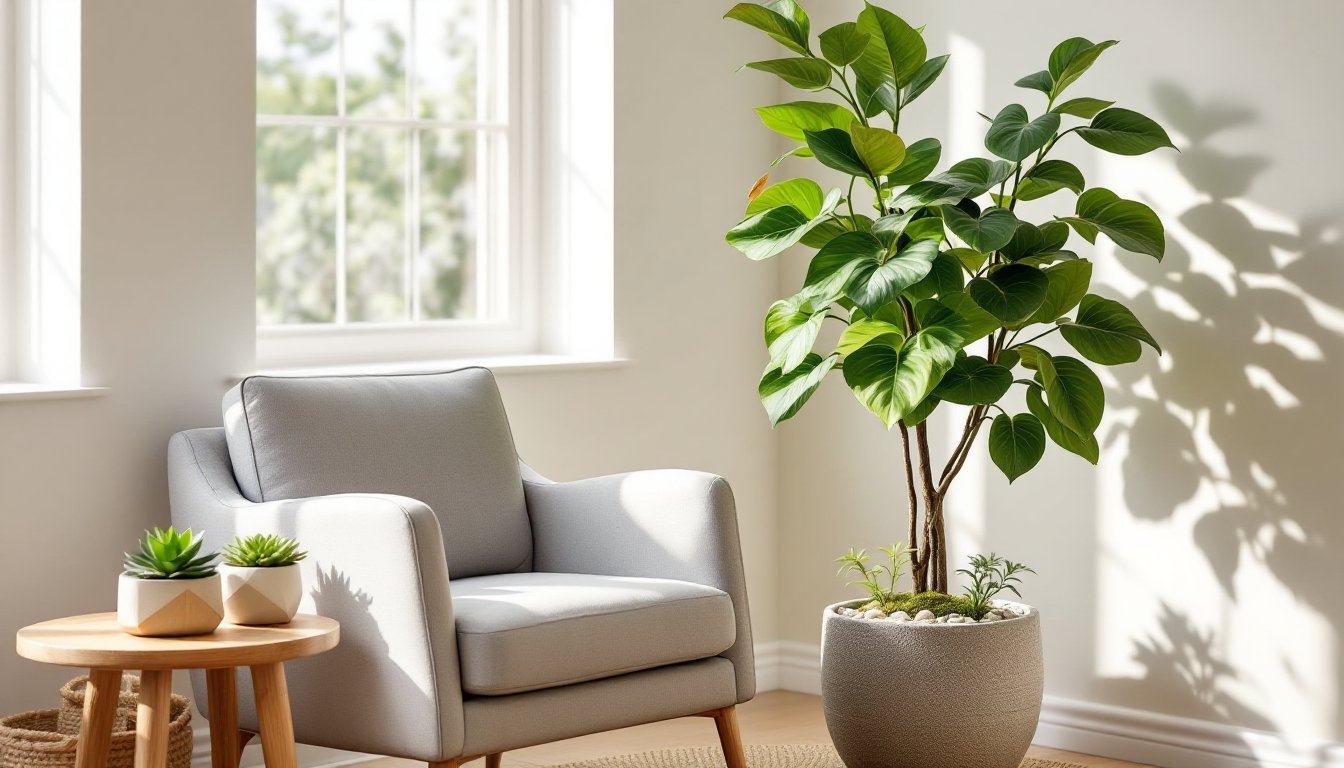
Statement plants dominate living rooms. Look for artificial fiddle leaf figs, monstera deliciosa, or bird of paradise in the 4- to 7-foot range. These fill vertical space and anchor seating areas without demanding floor-to-ceiling windows. Potted artificial olive trees or eucalyptus stems in tall ceramic planters suit modern farmhouse or Mediterranean styles.
For shelving and mantels, trailing pothos or string-of-pearls artificial indoor plants add dimension without overwhelming smaller surfaces. Faux succulents in geometric planters cluster well on coffee tables, mix sizes and textures (echeveria, jade, aloe) for a curated look. Living rooms with modern plant decor schemes benefit from cohesive color palettes: stick to green-only plants or add variegated options like artificial crotons for pops of color.
Corner placements work best for larger floor plants. Position them at an angle to break up 90-degree walls. Avoid centering fake house plants against flat walls, they read as afterthoughts. Instead, tuck them beside furniture or use them to soften the edge of a sectional.
Bedrooms and Private Spaces
Bedrooms call for softer, less dramatic greenery. Faux house plants like artificial snake plants, peace lilies, or small palms fit bedside tables and dressers without dominating the room. Heights between 12 and 24 inches maintain scale in these intimate spaces. Hanging planters with trailing ivy or ferns work above nightstands or in corners where floor space is tight.
Bathrooms benefit from moisture-loving species in artificial form, ferns, orchids, and bamboo read as natural fits even when they’re fake. According to design experts at Apartment Therapy, small spaces like bathrooms gain depth and interest with layered greenery. Wall-mounted planters or suction-cup hangers keep counters clear. Avoid placing artificial house plants directly above showers where steam and soap residue will coat leaves faster, adjacent walls or vanity areas stay cleaner longer.
Home offices need task-appropriate greenery. Compact fake indoor plants on desks shouldn’t obstruct monitors or keyboard space. A single 8- to 12-inch potted succulent or small tropical works. For larger offices, floor plants near windows (even if the window doesn’t provide real light) create visual balance and soften hard edges of desks and filing cabinets.
How to Choose High-Quality Artificial Plants
Material quality separates convincing faux plants indoor from obvious fakes. Look for plants with silk or high-grade polyester leaves, these materials hold color better and resist UV fading. Cheap plastic leaves develop a telltale sheen and fade to yellow-green under sunlight. Examine leaf texture closely: quality artificial plants include subtle color variations, vein details, and occasional “imperfections” like brown edges or small holes that mimic real plant wear.
Stem and trunk construction matters as much as foliage. Real wood trunks wrapped with natural bark or coated wire stems that bend and hold position add realism. Avoid straight, rigid stems, they scream artificial. For trees and larger plants, check that trunks have weight: hollow plastic trunks feel cheap and tip easily. Stems should insert into soil, moss, or rocks, not just sit exposed in a pot.
Leaf attachment is another tell. On quality artificial indoor plants, leaves attach individually or in small clusters with wire stems, allowing you to adjust and shape the plant. Mass-molded plants where entire branches are one solid piece look flat and lifeless. Gently tug a leaf, it should resist. Leaves that pull off easily won’t survive dusting or rearranging.
Size and proportion need to match real plant growth patterns. A 6-foot fiddle leaf fig should have larger leaves near the bottom and smaller ones at the top, with realistic spacing between leaf nodes. Overly symmetrical plants or evenly distributed foliage looks unnatural. Compare product photos to real plant images if you’re unsure.
Pot and base quality complete the illusion. Plants potted in weighted bases (sand or gravel at the bottom) stay upright and feel substantial. Exposed foam bases covered with moss, bark chips, or decorative stones hide the mechanics. Some fake house plants come in basic plastic nursery pots, plan to repot these in ceramic, terracotta, or woven baskets for a finished look. Make sure the pot is proportional: a 5-foot plant in a 6-inch pot looks top-heavy and unstable.
Styling Tips: Making Faux Plants Look Realistic
Layer with real elements to blur the line. Mixing one tropical big leaf house plant (if you can maintain it) with several faux house plants makes the entire display more believable. Even a single real succulent on a shelf with artificial counterparts adds authenticity.
Group in odd numbers, three or five plants cluster more naturally than pairs. Vary heights and pot styles: a tall floor plant, a medium tabletop plant, and a trailing hanging plant create visual interest. Don’t line plants up in a row: stagger them front-to-back and vary spacing. Interior designers at The Spruce recommend mixing plant types within a room rather than repeating the same species.
Adjust and shape foliage out of the box. Artificial house plants ship compressed: leaves need fluffing and stems need bending to look natural. Spread branches outward, twist stems slightly, and angle leaves in different directions. Real plants don’t grow symmetrically, your fake indoor plants shouldn’t either. Some leaves should face down or tilt awkwardly.
Lighting affects realism. Position faux plants indoor where real plants would logically thrive, near windows, under skylights, or beside glass doors, even though they don’t need the light. Avoid placing them in spots where real plants would obviously die (like a closed closet with the door open for display). This subconscious logic helps sell the illusion.
Add natural imperfections. Lightly dust leaves with a matte sealant spray to reduce shine. Some enthusiasts carefully trim a few leaf tips or add tiny brown spots with a marker to mimic natural wear. Don’t overdo it, one or two “damaged” leaves per plant is enough. Position plants at varying stages of “growth”, not every plant should look perfect and full.
Use realistic planters and toppers. Cover foam bases with sheet moss, bark chips, or decorative river rocks. For potted plants, add a thin layer of real or artificial soil on top. Terracotta pots, ceramic planters with drainage hole plugs, and woven baskets all read as authentic. Avoid shiny plastic pots or overly decorative containers that draw attention away from the plant itself. When styling spaces similar to those featuring big leaf house plants, matching pot styles creates cohesion.
Scale matters. A 3-foot plant works in a 10×12 room: a 7-foot tree overwhelms it. Conversely, tiny 6-inch succulents disappear in large, open-concept spaces. Match plant size to room volume and ceiling height. As a rule, floor plants should reach one-third to two-thirds of the wall height in the room where they’re placed.
Caring for and Maintaining Your Faux Indoor Plants
Dust is the enemy. Artificial indoor plants accumulate dust, pet hair, and airborne particles faster than smooth surfaces. For small plants and succulents, use a soft-bristle paintbrush or microfiber cloth weekly. Larger plants need a feather duster or handheld vacuum with a brush attachment every two weeks. Pay attention to crevices where leaves meet stems, dust collects heavily there.
For deep cleaning, take plants outside or into a shower. Use a handheld showerhead on low pressure or a spray bottle with lukewarm water and a few drops of dish soap. Spray thoroughly, let sit for two minutes, then rinse. Shake off excess water and let air-dry completely before returning the plant indoors. Do this every 2–3 months depending on household dust levels. Faux house plants in kitchens or near entryways need more frequent cleaning due to grease and outdoor debris.
UV protection extends lifespan. Even quality fake indoor plants fade in direct sunlight over time. If a plant sits in a south- or west-facing window, rotate it every few weeks so the same side doesn’t face the glass constantly. Some manufacturers sell UV-resistant sprays that coat leaves and slow fading, apply every 6–12 months. For permanent installations in sunny spots, expect to replace artificial house plants every 3–5 years as colors dull.
Restoring shape becomes necessary over time. Leaves droop, stems sag, and plants lose their initial fullness. Resteaming silk leaves with a garment steamer (hold 6–8 inches away, never touching the fabric) removes wrinkles and restores shape. Wire stems can be rebent: gently twist and reposition branches that have shifted. For advice on arranging multiple plants together, browsing through collections of common house plants provides layout inspiration.
Storage between seasons matters if you rotate decor. Wrap plants loosely in breathable fabric (old sheets work) to prevent dust while allowing airflow. Don’t compress leaves or stuff plants into tight boxes, permanent creasing is hard to reverse. Store in a cool, dry space away from direct heat sources. Basements work better than attics where temperature swings are extreme.
Inspect for damage every few months. Loose leaves, broken stems, or detached branches happen with regular handling. Most quality fake house plants allow for repairs, reattach leaves with hot glue or floral wire. Replace entire stems if needed: many manufacturers sell replacement parts. Pots crack or chip over time: plan to repot as needed to maintain a polished look.
Pet and child safety still applies. While artificial house plants aren’t toxic, small parts can be choking hazards, and pets may still chew or knock over planters. Secure tall floor plants with museum putty under the pot base if you have active pets or toddlers. Wall-mounted or hanging plants keep greenery out of reach entirely. For households considering expanding to live greenery as well, exploring options for houseplants for sale locally provides starting points for mixing real and artificial displays.