Moss isn’t just for terrariums and fairy gardens anymore. More houseplant owners are discovering its practical benefits, moisture retention, humidity regulation, and a natural aesthetic that beats the look of bare potting soil. Whether used as a top dressing or mixed into growing mediums, moss can improve the health and appearance of indoor plants when used correctly. This guide covers everything from selecting the right moss type to avoiding common mistakes that can compromise plant health or invite pests.
Table of Contents
ToggleKey Takeaways
- Moss for indoor plants improves moisture retention, humidity regulation, and adds a natural aesthetic when used as a top dressing or mixed into growing mediums.
- Sphagnum moss is ideal for moisture-loving plants like orchids and epiphytes because it holds up to 20 times its dry weight in water and has mild antimicrobial properties.
- Always sterilize outdoor moss by microwaving for 90 seconds or baking at 200°F for 20 minutes to prevent introducing pests, fungi, or pathogens to your houseplants.
- When applying moss as a top dressing, maintain a ½- to 1-inch layer around the plant stem and water the soil beneath the moss, not the moss itself, to prevent waterlogging and root rot.
- Match the moss type to your plant’s needs: avoid moss for succulents and cacti as it retains too much moisture, and use preserved sheet moss for low-humidity environments where live moss cannot survive.
- Live moss requires bright indirect light, humidity above 50%, and regular replacement when it browns or becomes crispy, while preserved moss lasts longer but needs occasional refreshing.
What Is Moss and Why Use It for Indoor Plants?
Moss is a non-vascular, rootless plant that absorbs water and nutrients directly through its leaves. Unlike ferns or flowering plants, moss lacks a traditional root system. Instead, it anchors itself using thread-like structures called rhizoids.
Indoor gardeners use moss for several practical reasons. As a top dressing, it slows evaporation from the soil surface, helping maintain consistent moisture levels, particularly useful for tropical plants that prefer humid environments. Moss also adds a finished, naturalistic look to potted plants without the dust and mess of exposed soil.
When incorporated into potting mixes, certain moss types improve aeration and water retention. Sphagnum moss, for example, can hold up to 20 times its dry weight in water, making it valuable for orchids, carnivorous plants, and epiphytes. It also has mild antimicrobial properties that can suppress harmful bacteria and fungi in growing media.
But moss isn’t a universal solution. It requires proper preparation and ongoing maintenance to avoid problems like mold, pests, or root rot. Understanding which type to use and how to apply it makes the difference between a thriving plant and a headache.
Types of Moss Best Suited for Indoor Plant Care
Not all moss is created equal. Here are the three types most commonly used indoors:
Sphagnum Moss
Sphagnum moss (often sold dried) is harvested from peat bogs and prized for its water-holding capacity. It’s lightweight, sterile when dried, and naturally acidic (pH 4.0–5.0), which makes it ideal for acid-loving plants like orchids, pitcher plants, and some ferns. It’s also used as a liner for hanging baskets or as a moisture-retentive layer in potting mixes.
Buy it dried in compressed bales or loose bags. Rehydrate before use by soaking in room-temperature water for 10–15 minutes.
Sheet Moss (Hypnum or Mood Moss)
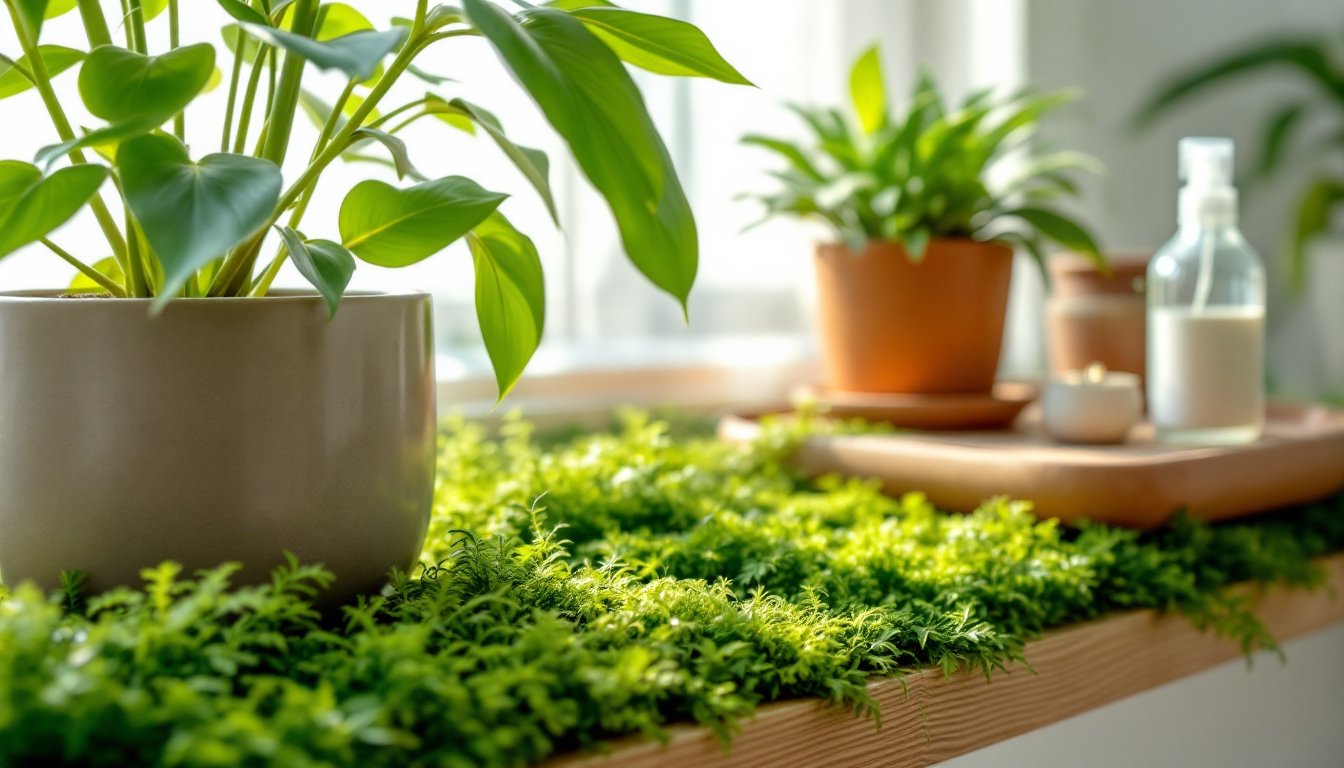
Sheet moss grows in flat, carpet-like mats and is typically sold preserved (dyed and treated) or live. Preserved sheet moss is low-maintenance and works well as a decorative top dressing, though it doesn’t retain moisture like sphagnum. It won’t grow or spread indoors but adds a natural, woodland aesthetic.
Live sheet moss requires more care, consistent moisture, indirect light, and good air circulation. It’s best suited for terrariums or high-humidity setups.
Reindeer Moss (Cladonia)
Even though its name, reindeer moss is actually a lichen. It’s typically sold preserved and dyed in various colors. While it makes an attractive top dressing and pairs well with modern plant decor, it doesn’t provide moisture retention or functional benefits. Use it for appearance only.
Avoid using outdoor moss collected from unknown sources. It may carry pests, mold spores, or pathogens that can spread to your houseplants.
How to Use Moss as a Top Dressing for Your Houseplants
Using moss as a top dressing is straightforward but requires a few preparatory steps to avoid introducing problems.
Step 1: Prep the Moss
If using dried sphagnum or live moss, soak it in water for 10–15 minutes to rehydrate. Squeeze out excess water, it should be damp, not dripping. For preserved sheet moss, a light misting is enough to reduce dust.
Inspect the moss for debris, insects, or mold. If you’re reusing outdoor moss, sterilize it by microwaving damp moss for 90 seconds or baking at 200°F for 20 minutes. Let it cool before use.
Step 2: Apply to the Soil Surface
Remove any existing mulch or debris from the soil. Spread a ½- to 1-inch layer of moss evenly over the surface, leaving a small gap around the plant stem to prevent rot. Press gently to ensure contact with the soil.
For cacti or succulents, skip the moss, it retains too much moisture and can promote rot. Stick to inorganic top dressings like pebbles or sand.
Step 3: Water as Usual
Moss should not change your watering schedule significantly. Water when the underlying soil is dry to the touch (usually 1–2 inches down). The moss will absorb and gradually release moisture, but it’s not a substitute for proper watering.
If the moss stays soggy for days, reduce watering frequency or improve pot drainage. Overly wet moss can attract fungus gnats or promote mold growth.
When to Replace It
Live moss may brown or dry out after a few months indoors, especially in low-humidity environments. Replace it when it loses color or texture. Preserved moss lasts longer but will eventually degrade or accumulate dust, rinse or replace as needed.
Using Moss in Potting Mixes and Growing Mediums
Moss can also be incorporated into potting mixes to improve structure, drainage, and moisture retention, though it’s not suitable for every plant type.
Sphagnum Moss for Orchids and Epiphytes
Orchids, bromeliads, and other epiphytes often grow in pure long-fiber sphagnum moss rather than traditional potting soil. The moss provides support, airflow, and moisture without becoming compacted.
To pot an orchid in sphagnum:
- Soak the moss until fully hydrated.
- Gently wrap damp moss around the roots, filling the pot loosely.
- Water when the moss is dry to the touch but still slightly springy.
This method works well for Phalaenopsis, Cattleya, and Vanda orchids. Avoid packing the moss too tightly, roots need air circulation to prevent rot.
Blending Moss into Soil Mixes
For tropical houseplants that prefer consistent moisture, like ferns, calatheas, or flowering indoor plants, add chopped sphagnum moss to standard potting mix at a ratio of 1 part moss to 3–4 parts soil. This increases water retention without sacrificing drainage.
Mix thoroughly before potting. The moss should be evenly distributed, not clumped.
Peat Moss vs. Sphagnum Moss
Don’t confuse peat moss with sphagnum moss. Peat is decomposed sphagnum harvested from bogs, it’s denser, darker, and commonly used in commercial potting mixes. Sphagnum moss is the living or recently dried plant, sold in strands or sheets.
Both retain moisture, but sphagnum is lighter and less prone to compaction. Peat is more affordable for large-scale mixing but raises sustainability concerns due to bog ecosystem damage. If sustainability matters, look for coconut coir as a peat alternative.
What Not to Mix With Moss
Avoid adding moss to mixes for succulents, cacti, or other drought-tolerant plants. It holds too much water and can lead to root rot. Stick to gritty, fast-draining mixes with perlite, pumice, or coarse sand.
Caring for Moss-Enhanced Indoor Plants
Moss requires its own care routine, separate from the plants it’s supporting. Here’s how to keep it healthy and functional.
Light Requirements
Moss prefers bright, indirect light. Direct sun will scorch and brown it quickly. North- or east-facing windows work well. If using live moss, aim for 10–12 hours of indirect light per day. Preserved moss doesn’t need light but may fade in prolonged sun exposure.
Humidity and Misting
Live moss thrives in humidity levels above 50%. In dry indoor environments, mist lightly every few days or place plants on a humidity tray. Avoid misting preserved moss, it doesn’t benefit and may encourage mold.
Many large indoor house plants create microclimates with higher humidity, making them natural companions for moss top dressings.
Watering Technique
Water the soil beneath the moss, not the moss itself. Use a watering can with a narrow spout or a turkey baster to direct water to the soil surface. This prevents the moss from becoming waterlogged while ensuring the plant roots get moisture.
If the moss dries out and becomes brittle, mist lightly or submerge briefly in water, then squeeze out excess before replacing it on the soil.
Fertilizing
Moss doesn’t need fertilizer, but the plants beneath it do. Use a diluted liquid fertilizer (half-strength) and apply it to the soil, avoiding direct contact with the moss. Over-fertilization can cause salt buildup that damages moss and plant roots.
Pest Prevention
Moss can harbor fungus gnats, springtails, or spider mites if kept too wet or if contaminated when purchased. Inspect regularly for signs of pests: tiny flying insects, webbing, or discolored patches.
To prevent infestations, allow the top layer of soil and moss to dry slightly between waterings. If pests appear, remove the moss, treat the plant with insecticidal soap or neem oil, and replace with fresh moss after the issue is resolved.
Common Mistakes to Avoid When Using Moss Indoors
Even experienced plant owners can run into trouble with moss. Here are the most frequent mistakes and how to avoid them.
Using the Wrong Type of Moss
Not all moss suits all plants. Sphagnum is great for moisture-loving species but disastrous for succulents. Preserved moss looks good but offers no functional benefit beyond aesthetics. Match the moss type to the plant’s needs, not just the look you’re after.
Skipping Sterilization
Using moss straight from the outdoors or an untrusted source can introduce pests, fungi, or mushrooms growing in house plants. Always sterilize collected moss by microwaving or baking it before use.
Overwatering
Moss retains water efficiently, which can trick you into thinking the soil beneath is also moist. Always check soil moisture at root depth, not just at the surface. Use a moisture meter or your finger inserted 1–2 inches down to gauge when to water.
Packing Moss Too Tightly
Whether used as a top dressing or in a potting mix, moss needs airflow. Compacting it reduces oxygen exchange and can suffocate roots or create anaerobic conditions that promote rot. Keep it loose and fluffy.
Neglecting Replacement
Live moss won’t last forever indoors unless conditions are perfect. If it turns brown, crispy, or slimy, replace it. Decomposing moss can become a breeding ground for mold and pests. Preserved moss lasts longer but still needs occasional refreshing.
Ignoring Humidity Needs
Live moss won’t survive in a low-humidity environment without supplemental misting or a humidifier. If your home runs dry (below 40% humidity), stick with preserved moss for aesthetics or focus on drought-tolerant houseplants that don’t need moss at all.
Choosing Aesthetics Over Function
Moss can look beautiful, but if it’s not serving a purpose, moisture retention, humidity regulation, or soil protection, it may not be worth the maintenance. Terrariums and enclosed setups are where moss truly shines indoors. In standard pots with average humidity, it’s often decorative rather than essential.
Conclusion
Moss offers real benefits for indoor plants when chosen and applied thoughtfully. It retains moisture, regulates humidity, and adds natural beauty to potted displays. But it’s not a set-it-and-forget-it addition, live moss needs humidity and light, while any moss used indoors requires monitoring to prevent pests or overwatering. Match the moss type to the plant’s needs, keep an eye on moisture levels, and replace it when it degrades. For advice on houseplant care resources, continue exploring practical growing guides.