Indoor plants bring life to any room, but they also attract unwelcome guests, aphids, spider mites, mealybugs, and scale insects that can wreck even the hardiest pothos or fiddle-leaf fig. Chemical pesticides work, but they’re harsh indoors where ventilation is limited and pets or kids are present. That’s where neem oil comes in. Extracted from the seeds of the neem tree (Azadirachta indica), this natural pesticide and fungicide has been used for centuries in agriculture and is now a staple for houseplant care. It’s effective, low-toxicity, and won’t leave residue on your furniture or in the air you breathe.
Table of Contents
ToggleKey Takeaways
- Neem oil is a natural, low-toxicity pesticide and fungicide extracted from neem tree seeds that effectively controls common indoor plant pests like aphids, spider mites, mealybugs, and whiteflies without harmful fumes or chemical residue.
- Proper dilution and application is essential: mix 1 teaspoon neem oil with 1 quart of water and dish soap, apply in the evening or early morning on all leaf surfaces, and use immediately since the solution breaks down within 8 hours.
- For active infestations, apply neem oil every 7 days for 3–4 weeks to target multiple generations of pests, then switch to preventative treatments every 2–4 weeks during warm months when pest activity peaks.
- Always test neem oil on a small leaf area first, wear protective gloves, ventilate the space well, and keep pets and children away until plants are completely dry, as some delicate plants like ferns may react poorly to oil treatments.
- Neem oil works best on soft-bodied pests in their early stages but won’t effectively control thrips, root aphids, or advanced root rot, so reassess the problem if no improvement appears after 4–6 weeks of consistent applications.
What Is Neem Oil and Why Use It on Houseplants?
Neem oil is a pressed vegetable oil extracted from the fruits and seeds of the neem tree, native to India and other parts of South Asia. The active compound, azadirachtin, disrupts the life cycle of insects by interfering with their hormones, preventing feeding, mating, and egg-laying. It also acts as a mild fungicide, tackling powdery mildew, leaf spot, and root rot when caught early.
Unlike synthetic pesticides that kill on contact, neem oil works systemically over several applications. Insects ingest it when they feed on treated leaves, and it breaks down their ability to reproduce or mature. This makes it effective against soft-bodied pests but gentle enough that it won’t harm beneficial insects like ladybugs if used correctly.
For indoor plant owners, neem oil offers several advantages:
- Low toxicity: Safe around humans and pets when diluted and applied as directed.
- Multi-purpose: Handles pests, fungal issues, and acts as a leaf shine when used in very dilute solutions.
- No harsh fumes: Unlike aerosol insecticides, neem oil doesn’t release volatile organic compounds (VOCs) that linger in enclosed spaces.
- Organic: Acceptable for use in organic gardening, which matters if you’re growing edible herbs indoors.
There are two main types: cold-pressed (or raw) neem oil and clarified hydrophobic extract of neem oil. Cold-pressed retains more azadirachtin and has a strong, garlicky smell. Clarified neem oil has a milder scent and mixes more easily with water but may be slightly less potent. For houseplants, either works: cold-pressed is often preferred for serious infestations.
Common Indoor Plant Pests Neem Oil Treats
Neem oil is effective against a wide range of common houseplant pests. Here’s what it handles:
- Aphids: Tiny, pear-shaped insects that cluster on new growth and leaf undersides. They secrete sticky honeydew that attracts mold. Neem oil suffocates aphids and disrupts their reproduction.
- Spider mites: Nearly invisible arachnids that leave fine webbing and stippled, yellowing leaves. They thrive in dry indoor conditions. Neem oil clogs their breathing pores and prevents egg hatching.
- Mealybugs: White, cottony pests that hide in leaf axils and along stems. They’re waxy and hard to dislodge. Neem oil penetrates their protective coating and kills them over repeated applications.
- Scale insects: Hard or soft-bodied pests that attach to stems and leaves, looking like small brown or tan bumps. Neem oil works best on the mobile crawler stage before they form a hard shell.
- Whiteflies: Small, moth-like insects that flutter up when leaves are disturbed. They suck sap and weaken plants. Neem oil targets both adults and nymphs.
- Fungus gnats: The larvae live in damp soil and feed on roots and organic matter. Applying diluted neem oil as a soil drench can help manage populations, though consistency is key for controlling fungus gnats.
Neem oil also helps prevent or treat fungal diseases like powdery mildew and sooty mold (which grows on honeydew left by pests). It won’t cure advanced fungal infections, but it slows spread and prevents new spores from taking hold.
What neem oil doesn’t handle well: thrips (they’re too mobile and reproduce quickly), root aphids (they’re buried in soil), and advanced root rot caused by overwatering. For those, you’ll need targeted treatments or better cultural practices.
How to Apply Neem Oil to Your Indoor Plants
Neem oil must be diluted before use. Applying it straight from the bottle can burn leaves and doesn’t improve effectiveness. Here’s how to mix and apply it correctly.
Mixing the Perfect Neem Oil Spray Solution
You’ll need:
- 1 teaspoon cold-pressed neem oil (or follow product label if using a concentrated extract)
- 1 quart (32 oz) of lukewarm water
- ½ teaspoon mild liquid dish soap or insecticidal soap (acts as an emulsifier so oil and water mix)
- Spray bottle (preferably glass or high-quality plastic that won’t degrade from oils)
Instructions:
- Pour the lukewarm water into the spray bottle.
- Add the dish soap and swirl gently to mix.
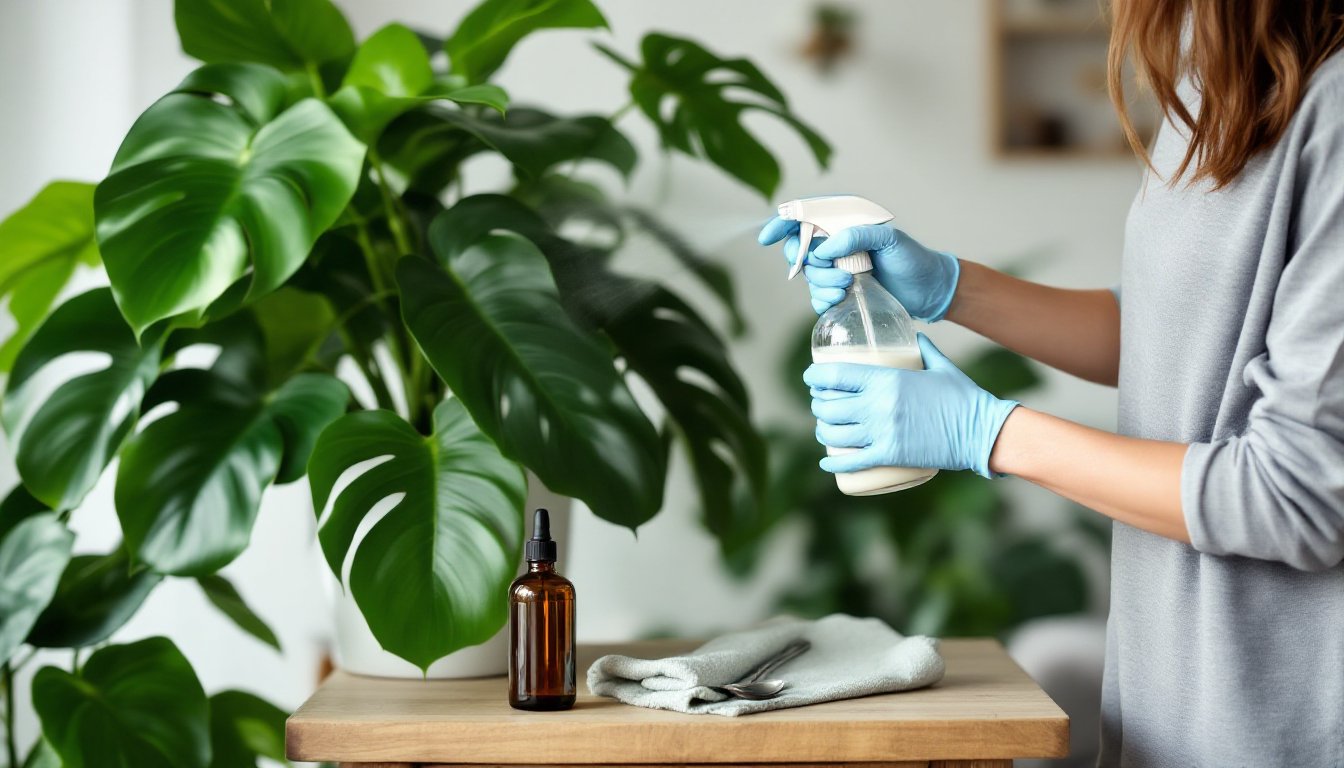
- Add the neem oil and shake vigorously for 30–60 seconds. The solution should look milky and uniform.
- Use immediately. Neem oil solutions break down within 8 hours once mixed, especially under light, so don’t store pre-mixed spray for later.
Tip: Some gardeners add a few drops of peppermint or rosemary essential oil to mask neem’s odor, but this is optional and doesn’t improve pest control.
Application Techniques for Best Results
- Test first: Spray a small section of one leaf and wait 24 hours. Some plants, especially those with delicate foliage like ferns or African violets, can react poorly to oils. If you see discoloration or damage, dilute further or skip neem oil entirely.
- Apply in the evening or early morning: Neem oil can cause leaf burn if applied under direct sunlight or hot grow lights. Treat plants when they’re out of bright light and temperatures are below 75°F.
- Coat all surfaces thoroughly: Pests hide on leaf undersides, in crevices, and along stems. Use a fine mist setting and spray until leaves glisten but don’t drip. Don’t forget the soil surface if treating fungus gnats.
- Wipe down large leaves: For plants like large indoor house plants with broad leaves (monstera, rubber plants, bird of paradise), use a soft cloth dampened with diluted neem oil to wipe both sides of each leaf. This removes pests, eggs, and dust while applying treatment.
- Treat the soil (optional): For soil-dwelling pests like fungus gnat larvae, water plants lightly with a more dilute solution (½ teaspoon neem oil per quart). Don’t drench to the point of waterlogging, neem oil in saturated soil can stress roots.
- Ventilate the room: Even though neem oil is low-toxicity, the smell can be strong indoors. Open windows or run a fan (without blowing directly on wet leaves) to circulate air.
Tools to have on hand:
- Spray bottle (1–2 quart capacity)
- Soft microfiber cloths
- Nitrile or rubber gloves (optional, but keeps hands clean)
- Safety glasses (if spraying overhead plants)
Safety Tips and Precautions When Using Neem Oil Indoors
Neem oil is generally safe, but it’s still a pesticide. Follow these precautions:
Wear gloves and safety glasses when mixing and spraying, especially if you have sensitive skin. Neem oil can cause mild irritation on contact.
Keep pets and children away during application. While neem oil is low-toxicity, it’s not meant to be ingested. Wait until treated plants are completely dry (usually 2–4 hours) before allowing pets or kids near them. Cats are particularly sensitive to essential oils and some plant treatments.
Ventilate the space. Neem oil’s odor isn’t harmful in small amounts, but it can be unpleasant. If treating multiple plants indoors, open windows or move plants to a garage or covered patio for application.
Don’t overapply. More neem oil doesn’t mean better results. Excessive application clogs leaf pores (stomata), which can stress plants and reduce photosynthesis. Stick to the recommended dilution rates, which are often verified by home and garden experts for safe indoor use.
Avoid treating stressed plants. If a plant is wilting from underwatering, sunburn, or recent transplant shock, wait until it recovers before applying neem oil. Stressed plants are more sensitive to treatments.
Store neem oil properly. Keep it in a cool, dark place in its original container. Heat and light degrade azadirachtin, reducing effectiveness. Pure neem oil can solidify below 70°F, if this happens, warm the bottle gently in a bowl of warm water before use.
Don’t use neem oil on edibles just before harvest. If you’re growing herbs or vegetables indoors, allow at least 7 days between neem oil treatment and harvest. Rinse leaves thoroughly before consumption.
Check plant compatibility. Some plants are sensitive to oils. Avoid neem oil on ferns, calatheas, and other thin-leaved tropicals unless you’ve tested a small area first. For these, insecticidal soap or manual pest removal may be safer options, especially for delicate flowering indoor plants that require extra care.
How Often Should You Apply Neem Oil to Indoor Plants?
Frequency depends on whether you’re treating an active infestation or using neem oil preventatively.
For active pest infestations:
Apply neem oil every 7 days for 3–4 weeks. Most insects have a life cycle of 1–3 weeks, so repeated applications catch newly hatched nymphs or larvae before they mature and reproduce. If you stop after one or two treatments, you’ll likely see pests return.
Inspect plants closely before each application. If pest numbers are dropping significantly, you can extend the interval to 10–14 days. If the infestation worsens or spreads to other plants, consider whether neem oil is the right tool, some pests may need stronger insecticidal soap, horticultural oil, or even professional pest control.
For preventative maintenance:
Once the infestation is cleared, apply neem oil every 2–4 weeks as a preventative measure, especially during warm months when pests are more active. This is particularly useful if you move plants outdoors in summer or bring in new plants that may carry hitchhikers.
Seasonal adjustments:
In winter, most houseplants enter dormancy or slow growth, and pest activity decreases. You can reduce neem oil treatments to once a month or as needed. Watch for dry indoor air from heating systems, which can trigger spider mite outbreaks, those may require more frequent treatment.
Monitor between treatments:
Check leaf undersides, stems, and soil surface weekly. Catching pests early makes treatment easier and more effective. Remove heavily infested leaves by hand to reduce pest load before spraying. Quarantine any new plants for 2 weeks before introducing them to your collection, this practice, often recommended by gardening resources, prevents introducing pests in the first place.
Signs you need to reapply:
- New pest activity (sticky residue, webbing, visible insects)
- Leaf damage progressing (yellowing, stippling, curling)
- Fungal spots spreading even though previous treatment
When to stop using neem oil:
If you’ve applied neem oil consistently for 4–6 weeks with no improvement, the pest may be resistant, or the issue may not be pest-related. Reassess the problem, could it be a watering issue, nutrient deficiency, or root rot? Consult resources from sites like Hunker for troubleshooting plant health issues beyond pest control. Sometimes the best solution is to isolate or discard heavily infested plants to protect the rest of your collection.