A one story tiny house strips away the complexity of lofts and ladders, delivering all the efficiency of compact living on a single, accessible level. For those who want to downsize without sacrificing mobility or comfort, or who simply can’t stomach climbing to bed every night, single-level tiny homes offer a practical middle ground. They’re easier to build, simpler to heat and cool, and far more accessible for anyone with mobility concerns. Whether you’re planning a backyard ADU, a retirement retreat, or a full-time dwelling under 400 square feet, understanding the trade-offs and design strategies behind one story layouts is the first step toward making it work.
Table of Contents
ToggleKey Takeaways
- A one story tiny house eliminates lofts and ladders to deliver all living functions on a single accessible floor, making it ideal for aging in place, families with young children, and anyone with mobility concerns.
- Single-level designs simplify construction by reducing lumber needs, eliminating complex roof framing, and speeding build times—a 300-square-foot one story tiny house on a trailer typically costs $23,000 to $40,000 in materials and takes 200 to 400 hours for experienced builders.
- Strategic design choices like 8-foot ceiling heights, steep roof pitches (6:12 to 8:12), and cross-ventilation windows make one story tiny houses feel larger and more comfortable while improving climate control efficiency.
- Space-saving layouts such as open floor plans with visual dividers, Murphy beds, built-in furniture, and L-shaped or shotgun configurations maximize functionality in 100 to 400 square-foot footprints.
- Light colors, vertical storage solutions, multi-function furniture, and layered lighting turn tight quarters into organized, visually open spaces without requiring additional square footage.
- Permit requirements vary significantly between foundation-based builds (requiring full plan review and occupancy approval) and trailer-based models (often following RV or park model standards), so always verify local zoning before starting construction.
What Is a One Story Tiny House?
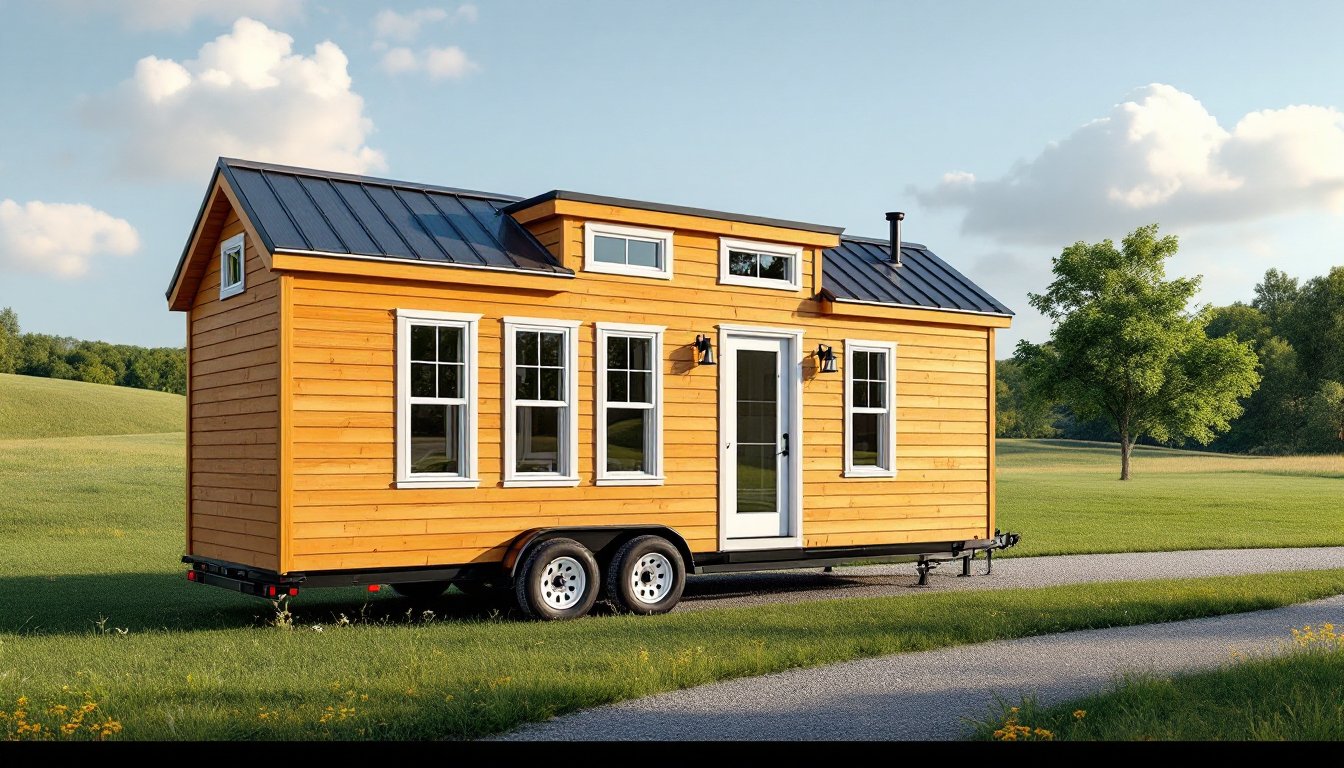
A one story tiny house is a compact dwelling, typically between 100 and 400 square feet, that places all living functions on a single floor. Unlike traditional tiny homes with sleeping lofts, everything from the bedroom to the kitchen sits at ground level. These homes can be built on foundations, concrete slabs, or even trailers (usually flatbed or gooseneck), depending on whether the owner wants a permanent structure or a mobile unit.
From a code standpoint, tiny houses on foundations may fall under International Residential Code (IRC) Appendix Q, which sets minimum standards for habitable rooms and ceiling heights (6’8″ in most living areas, 6’4″ in bathrooms). Trailer-based models often register as RVs under RVIA standards or park models, though local zoning still applies. If you’re building on a permanent foundation, expect to pull permits for electrical, plumbing, and structural work, especially if the build exceeds 120 square feet in many jurisdictions.
The single-level design limits vertical expansion, so every square foot of floor space has to pull double duty. That constraint forces smarter furniture choices, tighter layouts, and more intentional storage, all of which can actually simplify the build process compared to framing a loft and installing a steep ladder or staircase.
Why Choose a Single-Level Tiny Home?
Accessibility is the biggest draw. No one wants to haul laundry up a ladder at 10 p.m., and aging in place becomes a real option when the bedroom is three steps from the bathroom instead of six feet overhead. Single-level layouts work for families with young kids, anyone with joint issues, or builders who want to future-proof their investment.
Simplified construction is another win. Eliminating the loft means less lumber, no guardrails to code, and no structural gymnastics to support a sleeping platform. Roof framing stays straightforward, stick-build or simple trusses, and you won’t need to sister joists or beef up floor systems for a second level. Less vertical complexity also means shorter build times and fewer permit headaches in jurisdictions that scrutinize loft safety.
Climate control improves when you’re not fighting heat stratification. Warm air doesn’t collect uselessly near the ceiling: it stays where you live. A single mini-split (rated for 9,000–12,000 BTU) can often handle the entire space, and a small vented propane heater or radiant floor system works efficiently without the thermal lag you’d see in a two-story footprint.
The trade-off? You need more land or a longer trailer. A 300-square-foot one story home on a trailer typically requires a 24- to 28-foot deck, versus a 20-footer with a loft. If you’re on a foundation, expect a wider building envelope, closer to 10×30 feet instead of the narrower 8.5×20 footprints common in lofted builds.
Design Essentials for One Story Tiny Houses
Single-level design demands ruthless editing. Without a loft to hide the bed, every fixture and piece of furniture lives in plain sight. Start with ceiling height: aim for at least 8 feet in main living areas if local codes allow it, higher ceilings make small footprints feel less claustrophobic and open up space for clerestory windows or upper cabinets.
Roof pitch matters more than you’d think. A steeper pitch (6:12 or 8:12) creates volume and lets you add a vaulted ceiling or cathedral effect, which visually doubles the space. Flat or low-slope roofs (3:12 or less) simplify framing but trap heat and feel boxy, fine for modern aesthetics, less forgiving in practice.
Window placement is critical. In a one story layout, cross-ventilation keeps air moving and prevents stuffiness. Position windows on opposite walls whenever possible, and use awning or casement windows that open fully and catch breezes. Egress codes still apply: bedrooms need at least one window with a minimum 5.7 square feet of clear opening and a sill height no more than 44 inches off the floor.
Space-Saving Layout Ideas
Open floor plans work best when you define zones without walls. Use a kitchen island or a low bookshelf as a visual divider between cooking and living areas. Murphy beds or horizontal wall beds reclaim sleeping space during the day, though good hardware (rated for 300+ pounds) costs $800 to $1,500, not a place to cheap out.
Built-in furniture maximizes every inch. Think benches with lift-top storage, window seats over drawer banks, or a dining table that folds into the wall. Avoid freestanding dressers: instead, line one wall with floor-to-ceiling cabinets (24 inches deep max) and use sliding or pocket doors to keep pathways clear.
Bathrooms shrink to 3×6 feet or smaller. A corner shower (32×32 inches), wall-hung toilet, and a pedestal or floating vanity keep the footprint tight. If you’re on a trailer, consider a wet bath (shower drains in the floor, everything is waterproof), it’s compact and eliminates the need for a separate shower pan. For tiny house bedrooms that blend style with clever storage, proven layout tactics make even the smallest sleeping nooks feel intentional.
Popular Floor Plans and Configurations
The studio layout is the simplest: one open room with a bed alcove, kitchen along one wall, and a bathroom tucked in the back corner. Total footprint runs 200 to 300 square feet. It’s efficient, easy to heat, and fast to build, but privacy is nonexistent, fine for solo dwellers, tough for couples who keep different schedules.
L-shaped plans use a corner bathroom to divide sleeping and living zones. The kitchen runs along the long leg, the bedroom occupies the short leg, and the living area sits in the middle. This layout suits narrow lots or trailers and gives each function a bit of breathing room without adding walls.
Shotgun configurations line up all rooms in a row: entry, kitchen, living, bathroom, bedroom. It’s a classic railroad apartment translated to tiny house scale, and it works well on long, narrow trailers (8.5×28 feet). Traffic flow is linear, so everyone walks through the living space to reach the bedroom, awkward if you have guests, but it maximizes window exposure on both long walls.
Some builders add a bump-out or bay window to steal an extra 2 to 3 feet without widening the trailer. A kitchen bump-out creates counter space: a bedroom bay adds a reading nook or dresser alcove. Check trailer weight limits, most tandem-axle trailers max out around 10,000 to 14,000 pounds GVWR, and bump-outs add both weight and wind resistance.
Building vs. Buying: What to Consider
DIY builds give you full control over materials, layout, and budget, but they demand time and skill. Framing a one story tiny house on a trailer takes 200 to 400 hours for an experienced builder: double that if you’re learning as you go. You’ll need a miter saw or circular saw, a framing nailer (pneumatic or cordless), a drill/driver combo, and ideally a table saw for cutting plywood and trim. Factor in tool rental costs if you don’t already own them, a generator, compressor, and scaffolding can run $300 to $500 a month.
Material costs for a basic shell (framing, sheathing, roofing, windows, siding) run $15,000 to $25,000 for a 250-square-foot build, assuming mid-grade materials and regional lumber prices. Add another $8,000 to $15,000 for electrical, plumbing, insulation, interior finishes, and appliances. If you’re on a trailer, budget $4,000 to $7,000 for a new or used tandem-axle flatbed rated for the load.
Turnkey or shell kits from manufacturers cost $40,000 to $80,000 depending on finishes and included systems. You’ll get engineered plans, pre-cut framing, and often a warranty, but customization is limited. Some companies deliver a weathered shell (framed, roofed, sided, windows installed) and leave interior finish work to the buyer, a middle ground that cuts build time in half.
Permits and inspections vary wildly. Foundation builds typically require full plan review, electrical and plumbing sign-offs, and final occupancy approval. Trailer-based homes often skirt traditional permitting but may need RV certification or compliance with park model standards if you plan to park in an RV resort or on private land with restrictive covenants. Always check local zoning before you pour a footer or cut the first stud.
Interior Design Tips for Maximum Functionality
Light colors and reflective surfaces keep small spaces from feeling like caves. White or pale gray walls bounce light around: high-gloss or satin finishes on cabinets add depth. Skip dark accent walls unless you have abundant natural light, they shrink the room visually. For design inspiration rooted in smart decluttering strategies, simple organizing principles prevent tiny homes from feeling cramped.
Vertical storage is non-negotiable. Install cabinets or open shelving up to the ceiling, even if you need a step stool to reach the top. Magnetic knife strips, pegboards, and wall-mounted spice racks free up counter space. In the bathroom, a recessed medicine cabinet or corner shelves keep toiletries off the vanity.
Multi-function furniture earns its footprint. A bench that doubles as a storage chest, a coffee table with drawable compartments, or an ottoman that flips open for blankets, all of these reduce clutter without adding square footage. Avoid bulky recliners or oversized sectionals: instead, choose a loveseat or a pair of compact armchairs that can be rearranged.
Lighting layers matter more in tight quarters. A single overhead fixture creates harsh shadows: combine it with under-cabinet LEDs in the kitchen, sconces beside the bed, and a floor lamp in the living area. Dimmer switches (compatible with LED bulbs) let you adjust mood and save energy. For color ideas and budget-friendly home makeover projects, small tweaks often yield the biggest returns.
Textiles and rugs define zones without walls. A runner in the kitchen, a rug under the dining table, and a throw on the bed create visual boundaries. Stick to two or three coordinating colors to avoid chaos. And for broader small-space living strategies and home tour inspiration, real-life examples show what’s possible in under 400 square feet.