Not every room gets flooded with sunlight. Hallways, bathrooms, basements, and interior offices often sit in perpetual shade, but that doesn’t mean they can’t host greenery. The trick is choosing plants that evolved in understory environments, where direct sun is rare and survival depends on making the most of dim, indirect light. These plants won’t just tolerate low light: they’ll actually grow, filter air, and look good doing it. This guide covers what “no light” really means in practical terms, which species handle it best, and how to keep them alive when windows are scarce.
Table of Contents
ToggleKey Takeaways
- Indoor plants for no light spaces thrive when you choose low-light-tolerant species like snake plants, ZZ plants, and pothos that evolved in forest understory environments with minimal direct sun.
- Overwatering is the biggest killer in low-light conditions because slow photosynthesis means plants use less water; always check soil 2–3 inches deep before watering and err on the side of underwatering.
- Snake plants, ZZ plants, cast iron plants, and trailing vines tolerate minimal light but grow slowly—expect a few new leaves per year rather than rapid expansion, making patience essential.
- Use well-draining soil amended with 20–40% perlite or pumice and ensure pots have drainage holes, as low-light plants are more vulnerable to root rot in consistently wet soil.
- Supplement natural light with full-spectrum LED or fluorescent grow lights positioned 12–18 inches above foliage for 12–16 hours daily if your space is truly windowless.
- Dust leaves regularly and rotate plants quarterly to maximize their ability to absorb the limited light available and prevent lopsided, weak growth.
Understanding Low Light vs. No Light for Indoor Plants
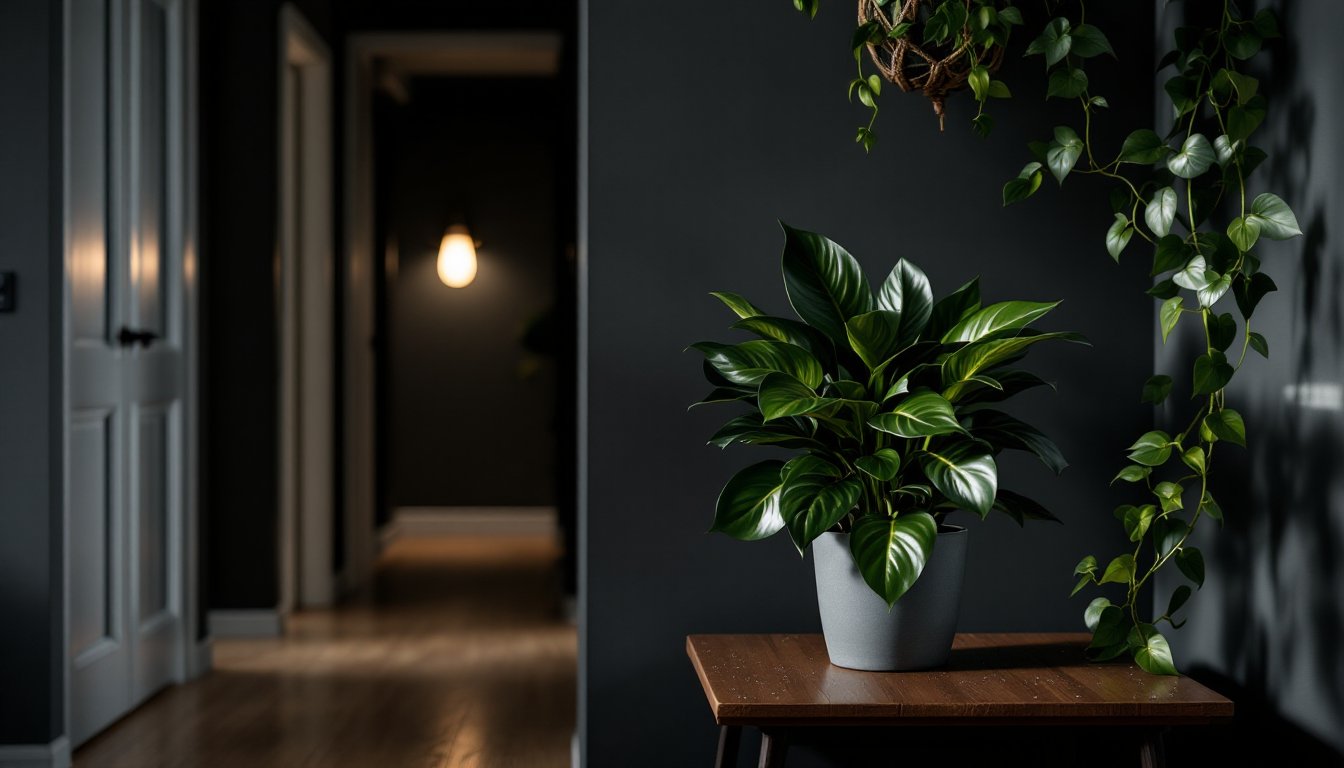
Botanically speaking, no natural light means zero photosynthesis, and no plant survives that indefinitely. What people usually call “no light” is actually low light: spaces that receive indirect or reflected daylight but never see direct sun. Think of a room with north-facing windows, a hallway lit only by ambient light from adjacent spaces, or a bathroom with a small frosted window.
In horticultural terms, low light is typically 50–150 foot-candles (about 500–1,500 lux). For reference, bright indirect light near a south-facing window can hit 1,000+ foot-candles, while deep room corners may drop to 25–50. Most “low-light” plants originate from forest floors in tropical or subtropical regions, where the canopy blocks 95% of sunlight. They’ve adapted large, efficient leaves and slow metabolisms to survive on scraps.
Artificial light can supplement or replace natural light entirely, as long as it provides the right spectrum and duration. Full-spectrum LED or fluorescent bulbs rated for plant growth work well. Position them 12–18 inches above foliage and run them for 12–16 hours daily to mimic a dim, overcast day. Incandescent bulbs generate too much heat and lack blue wavelengths, so skip those.
If a space is truly windowless and you won’t commit to grow lights, rotate plants every few weeks to a brighter area so they can recharge. Leaving any plant in absolute darkness for months will eventually kill it, yellowing leaves, stem rot, and total collapse are the usual endpoints.
Top Indoor Plants That Survive in Minimal Light
Snake Plant (Sansevieria)
Sansevieria trifasciata is nearly indestructible. Its thick, vertical leaves store water and tolerate neglect that would flatten softer species. In low light, growth slows to a crawl, maybe one or two new leaves per year, but the plant won’t decline. Varieties like ‘Laurentii’ (yellow-edged) and ‘Black Gold’ hold their variegation even in dim corners, though pure green cultivars are slightly more shade-tolerant.
Water only when the soil is bone-dry, typically every 3–4 weeks in winter, every 2–3 weeks in summer. Overwatering causes root rot faster than any light deficiency. Use a cactus or succulent mix with 30–50% perlite or coarse sand for drainage. Snake plants don’t need humidity or fertilizer: they’re tough enough for cacti and other low-maintenance species to feel insecure.
Warning: All Sansevieria parts are toxic to cats and dogs (saponins cause nausea and vomiting). Keep them on high shelves or in pet-free zones.
ZZ Plant (Zamioculcas Zamiifolia)
The ZZ plant has glossy, waxy leaflets and thick rhizomes that store water like underground batteries. It’s often mistaken for artificial foliage because it stays green and perky in conditions that would stress most houseplants. It handles fluorescent office lighting, basement rec rooms, and bathrooms with only a skylight.
ZZs grow slowly in low light, expect 2–4 new stems per year. They prefer to dry out completely between waterings: check that the top 2–3 inches of soil are dry before adding water. In winter, you might water once a month or less. Use a standard potting mix amended with 20–30% perlite. Fertilize once in spring with diluted liquid fertilizer (quarter-strength), or skip it entirely.
Safety note: The sap contains calcium oxalate crystals, which irritate skin and mucous membranes. Wear gloves when pruning or repotting, and keep away from curious pets and kids.
Pothos and Heartleaf Philodendron
Pothos (Epipremnum aureum) and heartleaf philodendron (Philodendron hederaceum) are often confused, and for good reason. Both are trailing vines with heart-shaped leaves, similar care needs, and forgiving temperaments. Pothos has slightly thicker, waxier leaves and asymmetrical leaf bases: philodendron leaves are thinner and more symmetrical.
Both tolerate low light but will stretch and produce smaller, darker leaves. Variegated types (golden pothos, marble queen, Brasil philodendron) lose some patterning in deep shade, reverting to mostly green. That’s not a problem, it actually helps them photosynthesize more efficiently. Many viney species excel in dim conditions when allowed to climb or cascade.
Water when the top inch of soil feels dry. They’re more tolerant of wet feet than succulents but still prefer slight underwatering to overwatering. Standard potting soil works fine. Trim leggy vines back to a node (the bump where leaves emerge) to encourage bushier growth. Propagate cuttings in water, they root in 7–14 days.
Toxicity warning: Both plants contain calcium oxalates. They’re not safe for pets or small children who might chew foliage.
Cast Iron Plant (Aspidistra Elatior)
The common name isn’t an exaggeration. Aspidistra survived Victorian parlors lit by gas lamps and heated by coal, conditions that killed nearly everything else. Its dark green, lance-shaped leaves emerge directly from the rhizome and grow to 18–24 inches tall. The plant tolerates neglect, temperature swings, low humidity, and irregular watering.
In minimal light, cast iron plants grow glacially, perhaps 2–3 new leaves per year. They prefer to dry out between waterings, so check the soil weekly and water only when the top half is dry. Use a well-draining mix (standard potting soil plus 15–20% perlite). Fertilize sparingly, if at all: excess nutrients cause leaf-tip burn. As with other low-light tolerant plants, patience is key, they won’t reward you with rapid growth, but they won’t die on you either.
Wipe leaves monthly with a damp cloth to remove dust, which blocks what little light they get. Cast iron plants are non-toxic, making them one of the safest choices for homes with pets or children.
How to Care for Plants in Dark Spaces
Watering discipline is critical. Low light slows photosynthesis and transpiration, so plants use less water. Overwatering in dim conditions invites root rot, fungus gnats, and bacterial issues. Always check soil moisture 2–3 inches down with your finger or a wooden skewer before watering. If in doubt, wait another few days. Self-watering pots can backfire in low light, they keep soil too wet for too long.
Soil and drainage matter more than most beginners realize. Use a mix that sheds excess moisture quickly: standard potting soil amended with 20–40% perlite, pumice, or coarse orchid bark. Ensure pots have drainage holes: sitting water at the bottom suffocates roots. Terracotta pots wick moisture away faster than plastic or glazed ceramic, which helps in consistently dim spaces.
Fertilizer needs drop when growth slows. Feed low-light plants once or twice per year, early spring and midsummer, with a balanced liquid fertilizer diluted to half or quarter strength. Overfertilizing causes salt buildup, burned leaf tips, and weak, leggy growth. Some growers skip fertilizer entirely in low-light setups without negative effects, following advice from resources like The Spruce and Gardenista.
Dust accumulation blocks light absorption and clogs stomata (leaf pores). Wipe smooth leaves with a damp microfiber cloth every 3–4 weeks. For plants with many small leaves (like pothos), a gentle shower in the sink or tub works better. Let foliage dry fully before returning plants to their spots to prevent fungal issues.
Pruning and grooming keep plants tidy and encourage denser growth. Trim yellow or brown leaves at the base with clean, sharp scissors. For trailing vines, cut back leggy stems to a node, the plant will branch from that point. Remove spent flower stalks on rare bloomers to redirect energy into foliage.
Pest management is easier in low light because most pests prefer warm, sunny conditions. Still, check for spider mites, mealybugs, and scale monthly. Inspect under leaves and along stems. Treat infestations with insecticidal soap or neem oil, following label directions. Fungus gnats thrive in damp soil: let the top 1–2 inches dry completely between waterings to break their lifecycle.
Repotting frequency is minimal. Low-light plants grow slowly and rarely become rootbound. Check every 2–3 years by gently sliding the rootball out of the pot. If roots circle densely or poke through drainage holes, move up to a pot 1–2 inches larger in diameter. Repot in spring or early summer when growth picks up slightly.
Air circulation prevents stagnant humidity and fungal problems. If your space has poor airflow, run a small fan on low speed for a few hours daily. Don’t aim it directly at foliage, gentle ambient movement is enough.
Temperature and humidity should stay stable. Most low-light tropicals prefer 60–75°F. Avoid placing plants near heating vents, drafty windows, or exterior doors. Humidity isn’t critical for the species listed here: they tolerate typical indoor levels (30–50% RH) without complaint. If leaf edges brown, it’s more likely a watering or salt issue than dry air.
Finally, rotate plants quarterly if one side faces a light source. This prevents lopsided growth. If a plant starts to yellow or drop leaves even though proper watering, it may need more light. Move it to a brighter spot or add a supplemental grow light before it declines too far.